Q&A Spotlight

How to Stay Cozy in a 1930s Bungalow

Posted on December 27, 2010 by Scott Gibson

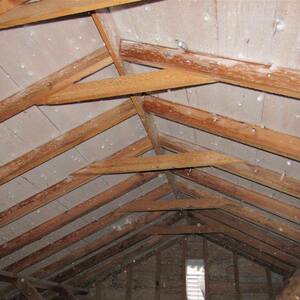
Rich Cowan lives in an 1,800-square foot bungalow in northern Massachusetts that has been renovated twice in the last decade but still has some problems: no insulation in the basement, and a furnace and air handler in the vented attic.

"The heat produced by our gas furnace is quickly moving through the ceilings to a vented attic, and then is lost forever," Cowan writes in a Q&A post. Money to correct the problems is not unlimited, but Cowan has a plan.

Air Leaks or Thermal Loss: What’s Worse?

Posted on December 20, 2010 by Scott Gibson

Beefing up R-values and reducing air leaks are the twin rallying cries of builders focusing on energy efficiency. Regardless of the particulars of the house design, more insulation and fewer air leaks make houses more comfortable, more durable, and less expensive to heat and cool.

No one seems to argue that point. But Al Cobb wonders which is more significant.

How Safe is PEX tubing?

Posted on December 13, 2010 by Scott Gibson

Builders have climbed on the PEXCross-linked polyethylene. Specialized type of polyethylene plastic that is strengthened by chemical bonds formed in addition to the usual bonds in the polymerization process. PEX is used primarily as tubing for hot- and cold-water distribution and radiant-floor heating. bandwagon in droves. Cross-linked polyethylene tubing is increasingly taking the place of copper in residential plumbing systems for a variety of reasons: ease of installation, resistance to acidic water, and the virtual elimination of leak-prone fittings.

It all adds up to a juggernaut for a building material that's only been available in the U.S. since the 1980s.

But Arlene DiMarino isn't sure about the safety of PEX.

Are We Really Better Off With Building Codes?

Posted on December 6, 2010 by Scott Gibson

After restoring historic buildings for more than three decades, Roy Harmon seems a little disillusioned, if not outright confused, with the current state of residential construction.

Most of the buildings he's worked on are more than a century old, built at a time when carpenters served apprenticeships but building codes did not exist. The only reason the buildings eventually fail is because of neglect, not inherently poor construction.

A Checklist for Building a House

Posted on November 29, 2010 by Scott Gibson

John Hess built a small house 20 years ago, and he may have the chance to build again in the coming year. But he realizes a lot has changed in residential construction since 1990.

He'd like to incorporate more green-building features this time around while making fewer mistakes than he did with his first house.

“Can anyone recommend a downloadable checklist or spreadsheet which covers the many and varied aspects of building a house?” he asks in this Q&A post.

Does Spot Ventilation Work in an Ultra-Tight House?

Posted on November 22, 2010 by Scott Gibson

UPDATED: 12/9/10 with expert opinions from David White and Marc Rosenbaum

Frank O's new house is tight — very tight. Tests by an energy auditor measured 0.13 air changes per hour at 50 pascals of depressurizationSituation that occurs within a house when the indoor air pressure is lower than that outdoors. Exhaust fans, including bath and kitchen fans, or a clothes dryer can cause depressurization, and it may in turn cause back drafting as well as increased levels of radon within the home. (ACH50), meaning the house beats the very stringent airtightness target of the PassivhausA residential building construction standard requiring very low levels of air leakage, very high levels of insulation, and windows with a very low U-factor. Developed in the early 1990s by Bo Adamson and Wolfgang Feist, the standard is now promoted by the Passivhaus Institut in Darmstadt, Germany. To meet the standard, a home must have an infiltration rate no greater than 0.60 AC/H @ 50 pascals, a maximum annual heating energy use of 15 kWh per square meter (4,755 Btu per square foot), a maximum annual cooling energy use of 15 kWh per square meter (1.39 kWh per square foot), and maximum source energy use for all purposes of 120 kWh per square meter (11.1 kWh per square foot). The standard recommends, but does not require, a maximum design heating load of 10 W per square meter and windows with a maximum U-factor of 0.14. The Passivhaus standard was developed for buildings in central and northern Europe; efforts are underway to clarify the best techniques to achieve the standard for buildings in hot climates. standard.

Frank O has installed a heat-recovery ventilator (HRV(HRV). Balanced ventilation system in which most of the heat from outgoing exhaust air is transferred to incoming fresh air via an air-to-air heat exchanger; a similar device, an energy-recovery ventilator, also transfers water vapor. HRVs recover 50% to 80% of the heat in exhausted air. In hot climates, the function is reversed so that the cooler inside air reduces the temperature of the incoming hot air. ) to provide fresh air as well as fans for spot ventilation and a range hood fan rated at 189 cubic feet per minute (cfm).

Sounds perfect. So what's the problem?

How to Finish Exterior Foundation Insulation

Posted on November 15, 2010 by Scott Gibson

Energy gurus and building codes routinely recommend these days that foundation walls be insulated. One way of accomplishing that is by adding a layer of rigid foam insulation on the outside of the foundation.

And that's exactly what William Poole is planning to do.

Most of the rigid foam insulation will be underground and out of sight. But what do you do with that stretch of exposed insulation above grade?

How to Keep the Noise Down

Posted on November 8, 2010 by Scott Gibson

A teen whose musical tastes run to head-pounding heavy metalMetallic elements with high atomic weights, including mercury, lead, cadmium, arsenic, and chromium. Released as industrial pollutants, some heavy metals are toxic and may accumulate to hazardous levels in the food chain. Different from Heavy Metal, which is a type of music frequently heard on job sites. classics? Uncle Ted, whose snoring would wake the dead? Who knows what's giving Robert Car pause for thought. Whatever it is, he wants to build in some effective sound-proofing.

“I'm aware of using more than one layer of drywall,” he writes in Q&A post, “but is that the only way?”

Increase the mass of the wall

Vapor Barriers, Radon, Basement Slabs, and VOCs — How to Stop the Poison?

Posted on November 1, 2010 by Scott Gibson

How's this for a dicey scenario: Arlene DiMarino is a homeowner with chemical sensitivities who lives a couple of blocks away from an EPA Superfund site.

"I am aware of a toxic plume of underground water that is close by," she writes in a Q&A post. "I am concerned that these VOCsVolatile organic compound. An organic compound that evaporates readily into the atmosphere; as defined by the U.S. Environmental Protection Agency, VOCs are organic compounds that volatize and then become involved in photochemical smog production. can permeate the cement floor and foundation."

Beefing Up Insulation (and Making it Easier to Hang Cabinets) in a Kitchen Remodel

Posted on October 25, 2010 by Scott Gibson

Eric Nash is renovating a kitchen with "old school" 2x4 walls. He's gutting the room, but not touching the outside of the house. He'd like to present the homeowners with some options for increasing the R-valueMeasure of resistance to heat flow; the higher the R-value, the lower the heat loss. The inverse of U-factor. of the exterior walls while making a better air seal.

Here's his plan: fill the stud bays with cellulose, add 1 1/2 in. of rigid foam insulation on the inside, then a layer of 1/2-in. plywood on which to hang cabinets, and, finally, 1/2-in. drywall.

Register for a free account and join the conversation


Get a free account and join the conversation!
Become a GBA PRO!

Syndicate content