Building Science

Raining, Dripping, Crying Duct Boots

Posted on September 25, 2012 by Allison A. Bailes III, PhD, GBA Advisor

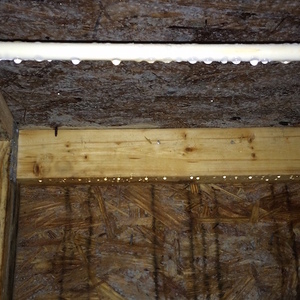
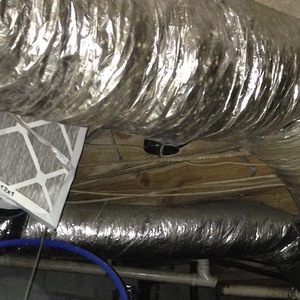
I've seen it over and over: The central air conditioner's ceiling registers raining down onto the floor. The insulation liner on the duct in the crawl space holding a gallon or two of water. The office that has spots appearing on the ceiling. Such problems are not at all uncommon, although they should be.

The Loophole and the Ozone Hole

Posted on September 5, 2012 by Allison A. Bailes III, PhD, GBA Advisor

Holes are generally bad things. Those of us who teach building science spend a lot of time showing people how to measure the effects of holes, how to seal them up, and why they’re bad in the first place. That’s not universally true, of course. Some holes we do want, but we also want to be able to control what happens in those holes, as with a door or window.

Grading the Installation Quality of Insulation

Posted on August 27, 2012 by Allison A. Bailes III, PhD, GBA Advisor

Six years ago, RESNET published a major revision of the HERSIndex or scoring system for energy efficiency established by the Residential Energy Services Network (RESNET) that compares a given home to a Home Energy Rating System (HERS) Reference Home based on the 2006 International Energy Conservation Code. A home matching the reference home has a HERS Index of 100. The lower a home’s HERS Index, the more energy efficient it is. A typical existing home has a HERS Index of 130; a net zero energy home has a HERS Index of 0. Older versions of the HERS index were based on a scale that was largely just the opposite in structure--a HERS rating of 100 represented a net zero energy home, while the reference home had a score of 80. There are issues that complicate converting old to new or new to old scores, but the basic formula is: New HERS index = (100 - Old HERS score) * 5. Standards, officially named the 2006 Mortgage Industry National Home Energy Rating Systems Standards. One important new feature in the standards was the grading of insulation installation quality. Before this change, R-13 insulation installed poorly (as shown in the second photo, below) was equivalent to any other R-13 insulation, including insulation with impeccable installation quality (as shown at the top of this article).

Will Passivhaus Remain a Boutique Program?

Posted on August 14, 2012 by Allison A. Bailes III, PhD, GBA Advisor

This weekend I bought my ticket to Denver for the Passive House conference at the end of September. The program has intrigued me since I first found out about it in 2007, but I haven't gotten involved with it yet. That may be changing now.

Why Doesn’t Heat Flow Backwards?

Posted on August 8, 2012 by Allison A. Bailes III, PhD, GBA Advisor

Why can't you put a cup of cold coffee on the table, wait a moment, and then enjoy a nice cup of hot coffee? We do the opposite all the time, but what makes the direction of hot-to-cold so special? If you've studied physics or taken a class in building science, you've heard that the answer is the Second Law of Thermodynamics. But what does that really mean?

Oooh, Shiny Stuff! — Radiant Barrier Fundamentals

Posted on July 30, 2012 by Allison A. Bailes III, PhD, GBA Advisor

Today just feels like a good day to talk about shiny stuff. Radiant barriers are a green building product with a lot of sex appeal, if that's possible for construction products. People get really crazy about attics, though. (Don't get me started about powered attic ventilators!) Maybe brains have a tendency to overheat when discussing them. The general category of radiant barriers is an area of great hype and misunderstanding, so I'll tell you what I know, explain the basic physics, and give you a couple of links to some great resources for more information.

Is a Ground-Source Heat Pump a Renewable Energy System?

Posted on July 24, 2012 by Allison A. Bailes III, PhD, GBA Advisor

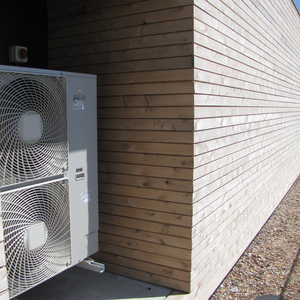
Here's another rant that goes in my “drives me crazy” bin of articles. I'm in good company, too. Another article that ran at Green Building Advisor recently discussed making the choice between an air-source heat pump and a ground-source (a.k.a. “geothermal”) heat pump.

The Magic of Cold

Posted on July 16, 2012 by Allison A. Bailes III, PhD, GBA Advisor

With the recent heat wave that set all kinds of records across the US, including an all-time high of 106° F here in Atlanta, air conditioning has become quite the topic of conversation. Why, just yesterday I overheard two little old ladies* on a park bench debating thermostatic expansion valves versus capillaryForces that lift water or pull it through porous materials, such as concrete. The tendency of a material to wick water due to the surface tension of the water molecules. tube metering devices — and almost coming to blows over it!

Energy Star Homes Must Comply with Version 3 Guidelines Now

Posted on July 11, 2012 by Allison A. Bailes III, PhD, GBA Advisor

On the 1st of this month, the Energy StarLabeling system sponsored by the Environmental Protection Agency and the US Department of Energy for labeling the most energy-efficient products on the market; applies to a wide range of products, from computers and office equipment to refrigerators and air conditioners. new homes program moved fully (well, almost) into the much more rigorous set of guidelines called Version 3. There's been a lot of discussion on the the transition for the past three years, when the Energy Star team at the U.S. EPA first started vetting the update with HERSIndex or scoring system for energy efficiency established by the Residential Energy Services Network (RESNET) that compares a given home to a Home Energy Rating System (HERS) Reference Home based on the 2006 International Energy Conservation Code. A home matching the reference home has a HERS Index of 100. The lower a home’s HERS Index, the more energy efficient it is. A typical existing home has a HERS Index of 130; a net zero energy home has a HERS Index of 0. Older versions of the HERS index were based on a scale that was largely just the opposite in structure--a HERS rating of 100 represented a net zero energy home, while the reference home had a score of 80. There are issues that complicate converting old to new or new to old scores, but the basic formula is: New HERS index = (100 - Old HERS score) * 5. raters and home builders. In case you've ignored or haven't heard much about it yet, here's a quick overview of what's new:

More Than You Ever Wanted to Know About the HERS Index

Posted on June 25, 2012 by Allison A. Bailes III, PhD, GBA Advisor

A lot of home builders and homeowners are getting certified home energy ratings to find out how efficient their homes are. There's also a lot of buzz about HERS ratings, with builders looking at them as a tool for marketing their homes.

Register for a free account and join the conversation


Get a free account and join the conversation!
Become a GBA PRO!

Syndicate content