
More Code Green


9 Steps to A Greener Code
New homes built using the 2009 International Residential Code (IRC) or International Energy Conservation Code (IECC) will be more energy efficient than ever. As a consequence, a builder’s world may become a bit more complex and, in some cases, a bit more expensive. Recent spikes in energy costs have increased the attention on regulatory measures that limit energy waste.
STEP 3: LIGHTING UPGRADES (Section N1104)
The code: Half of all indoor lamps in permanent light fixtures must be high efficacy. Additionally, recessed can lights must meet air leakage standards.
What it means to you:
Lighting represents about 12% of the energy used in a home. This code change will require at least half of all permanently mounted lightbulbs to be high-efficacy compact fluorescents (CFLs), which are roughly 80% more efficient than incandescent bulbs.
The rationale for the 50% standard as opposed to 100% is to allow for circumstances where a high-efficiency bulb would not perform well―when operated by a dimmable switch, for example.
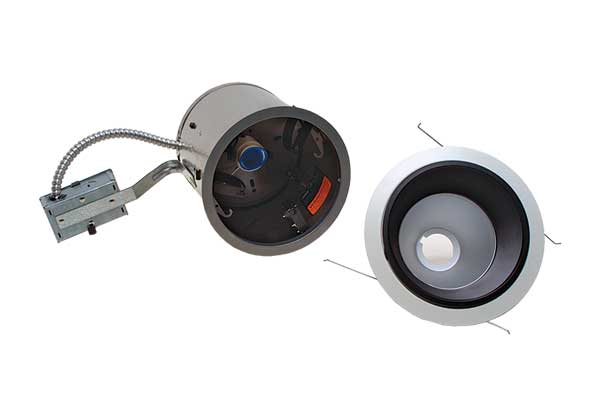
The code also demands that all recessed lights in the building envelope meet an ASTM manufacturing tightness standard (ASTM E283) and be sealed with a gasket or caulk between the housing and the interior wall or ceiling covering. Air-leakage testing for these fixtures has been an option for years. Now, the manufacturing community is able to perform uniform standard for air sealing verified through testing.
This provision will decrease air leakage for recessed light connections to walls or ceilings and increase standards for the tightness of the fixtures themselves. Essentially, manufacturers will make better, tighter light fixtures because of this code change. It will be your job to install gasket or caulk as an air-sealing measure.
The 2009 building codes reflect practices that not only increase energy efficiency, like air sealing measures and increased insulation, but also address sustainable building practices, like moisture control.
Other segments of this series:
Part 4: Programmable Thermostats
Part 7: Insulating Mechanical Pipes
Part 8: Exceeding the Energy Code
Weekly Newsletter
Get building science and energy efficiency advice, plus special offers, in your inbox.



0 Comments
Log in or create an account to post a comment.
Sign up Log in