
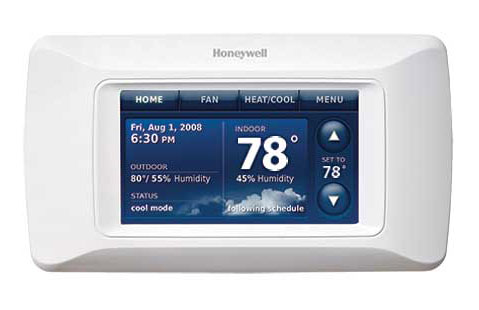
Image Credit: Homeywell
More Code Green


9 Steps to A Greener Code
New homes built using the 2009 International Residential Code (IRC) or International Energy Conservation Code (IECC) will be more energy efficient than ever. As a consequence, a builder’s world may become a bit more complex and, in some cases, a bit more expensive.
STEP 4: PROGRAMMABLE THERMOSTATS (Section N1103.1.1)
The code: Where the primary heating system is a forced-air furnace, at least one thermostat per dwelling unit shall be capable of controlling the heating and cooling system on a daily schedule to maintain different temperature set points at different times of the day. This thermostat shall include the capability to maintain zone temperatures between 55°F (13°C) and 85°F (29°C). The thermostat shall initially be programmed with a heating temperature no higher than 70°F (21°C) and a cooling temperature no lower than 78°F (26°C).
What it means to you:
This type of energy-saving device is commonly regarded as low-hanging fruit. It has been a popular addition to many new homes because of customer demand. A typical programmable thermostat will add between $20 and $40 over the cost of manual thermostats. The Energy Star website suggests that when used properly, programmable thermostats can save about $150 a year in energy costs.
This code requirement is mandated only for new homes using a forced air heating system because using programmable thermostats with other types of heating systems can cause complications.
The 2009 building codes reflect practices that not only increase energy efficiency—air-sealing measures and increased insulation, for example—but also address sustainable building practices, such as moisture control.
Other segments of this series:
Part 4: Programmable Thermostats
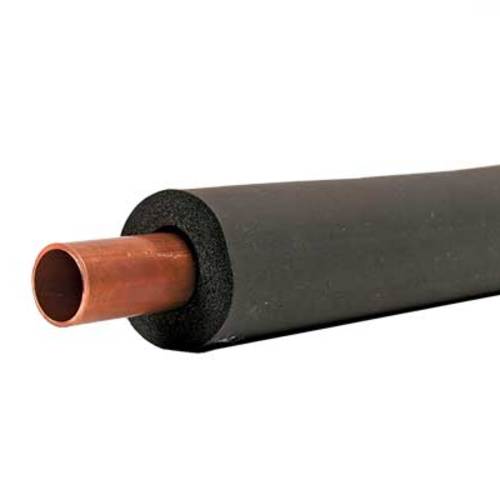
Part 7: Insulating Mechanical Pipes
Part 8: Exceeding the Energy Code
Weekly Newsletter
Get building science and energy efficiency advice, plus special offers, in your inbox.






2 Comments
Programmable Thermostats
Energy Star is withdrawing their specification for programmable thermostats by the end of this year. Apparently the touted savings is being shown to be much lower than originally thought, and in some cases actually higher. http://www.energystar.gov/index.cfm?c=revisions.thermostats_spec
Harvey Sachs's comments
Harvey Sachs, the buildings program director at ACEEE, submitted this comment as part of the Energy Star thermostat review:
"At this point, ENERGY STAR has not shown savings associated with use of programmable thermostats. There is no reasonable basis for predicting that the current specification will lead to significant energy savings. We recommend that ENERGY STAR suspend the program for now."
Log in or create an account to post a comment.
Sign up Log in