

Image Credit: Structured Solutions II LLC
More Energy Solutions


You’re down to the last few days before Christmas. You’re looking for that meaningful, special gift for a family member, special friend, or co-worker. Buy a gift that keeps on giving—by saving energy! Below, is my top-10 list of energy-saving holiday gifts.
- Compact-fluorescent lamps (CFLs). This is a no-brainer for those who still rely mostly on incandescent light bulbs. They use a quarter to a third as much electricity as standard bulbs, last five to ten times as long and, compared with CFLs from a few years ago, are more compact and perform better. Look for CFLs that carry an Energy Star label, which indicates that they meet certain durability standards as well as energy performance requirements. Cost: $1-2 apiece; look for offers that include efficiency rebates.
- Low-flow showerhead. High-quality, low-flow showerheads use as little as 1.5 gallons per minute (gpm) yet deliver a strong, invigorating spray of water. Expect to pay a pretty high price for a top-quality showerhead. Among my favorites is the Delta H20 kinetic product line, which is available in various styles. American Standard also just introduced a FloWise showerhead that has a standard flow of 1.5 gpm, but can be boosted to 2.0. Water-saving showerheads save energy by reducing hot water consumption. Cost $25-50.
- Kill-a-Watt meter. The Kill-a-Watt meter, made by P3 International, provides an easy way to measure electricity usage from any standard-voltage, plug-in device or appliance. I’m using one at home to measure the electricity use of an electric space heater I have next to the water heater for a garage apartment that I don’t want to freeze. I’ve also used it to see how much electricity my battery-powered electric lawnmower uses (not too much), to figure out if I should buy a new fridge (not yet), and determine the stand-by draw of my cable-modem and wireless router (pretty significant!). Cost about $25 online.
-
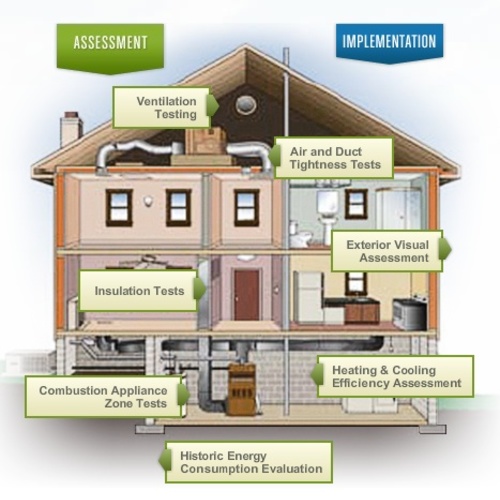
Gift certificate for an energy audit. I don’t know if area weatherization companies are set up to provide gift certificates, but this would be a great present for someone special. Exciting, no; highly useful, yes. A comprehensive energy audit for a typical house will cost about $500.
- Programmable thermostat. For someone who takes the time to learn how to use it, a programmable thermostat can save a lot of energy. The installation is fairly easy, though you may want to have your heating contractor do it. Cost: $40-100, not including installation.
- Electroluminescent night light. Good stocking stuffer. I’ve used a number of the LimeLite products ten or fifteen years without any problems or apparent loss in light output. Electricity consumption is miniscule—just a few cents’ worth per year—and a photocell turns it on only at night. Cost: $2-4 apiece.
- Faucet aerators. These simple screw-in filter-like gadgets significantly reduce water use of faucets. A 0.5 to 1.0 gpm aerator should be fine for most bathroom taps—substantially less than the 2.2 gpm federal standard and far less than that of many older faucets. In the kitchen, you probably want a higher flow rate to fill pots quickly. One downside of reducing the flow is that it will take longer for hot water to get to the faucet. Really old faucets won’t accept screw-in aerators. Cost: $1-4 piece.
- Copy of Consumer Guide to Home Energy Savings. There are lots of good books on saving energy, but this is the only one I wrote. It’s published by the American Council for an Energy Efficient Economy (a great nonprofit organization advancing energy efficiency) and New Society Publishing. The 9th edition came out in 2007 and was significantly revised from previous editions. Cost: $19.95. Buy it locally!
- Indoor clothes drying rack. Drying clothes inside in the winter months, when the indoor air tends to be dry, is a good way both to save energy and to introduce humidity to your house. Cost: $15-80, depending on size, materials, and quality.
- Sno Wovel. I admit that I haven’t yet tried one of these babies, but they look awesome! It a wheeled snow shovel (with a large, single wheel) that provides leverage, letting you push down to lift snow, rather than lifting it directly. It saves gasoline if you use it instead of a snowblower or plowing; otherwise it only saves your energy—though there might be some additional fuel savings if this keeps you from being rushed to the hospital for a back injury! Check out the video. Cost: $120. (If you see my wife, let her know that this might make a nice gift for the primary snow shoveler in her life; I’ve dropped some hints but I’m not sure they’ve taken!)
That’s my list. What would be on yours?
I invite you to share your comments on this blog. You can also follow my musings on Twitter.
Weekly Newsletter
Get building science and energy efficiency advice, plus special offers, in your inbox.




One Comment
Sno Wovel
Alex,
We just got 2 feet (!) of snow here in Charlottesville, VA over the weekend. I saw a neighbor a few blocks away using a Sno Wovel on his sidewalk and he was killing it! I don't think a snowblower could move the snow any faster. Perhaps you could convince the Sno Wovel folks to introduce a John Henry-esque competition at the Burlington Winter Festival!
Log in or create an account to post a comment.
Sign up Log in