
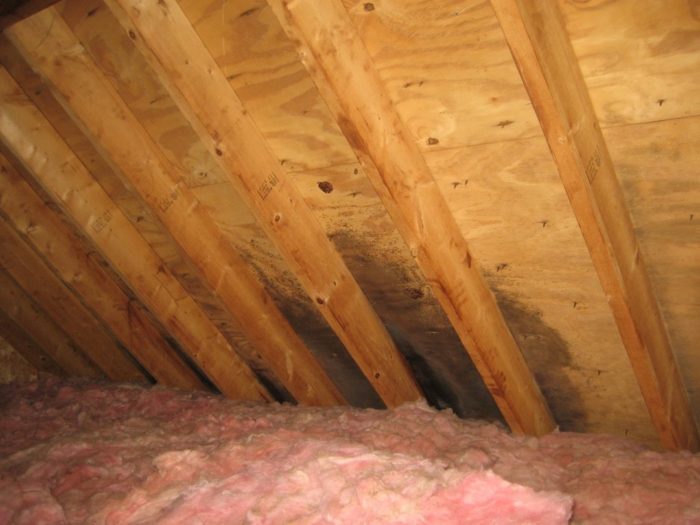
Image Credit: Rick Roberts
More Energy Solutions


What’s moisture have to with energy? Quite a bit, actually. When we tighten up or insulate a house, there’s the potential of causing moisture problems that could harm your health by allowing mold to grow or affect the life of materials your house is built from. And any time you work on a house, especially when you do things that affect the exterior envelope (walls, roof, foundation), you’re provided with an opportunity to fix problems that may already exist.
Moisture gets into houses in lots of ways—sometimes as liquid water and sometimes as invisible water vapor. It can leak in from the outdoors—from a leaky roof or improper flashing around windows, for example. It can come from leaking pipes inside the house. It can seep into a basement from rainfall or groundwater. It can be brought into a house in unseasoned firewood. It can be introduced as water vapor from showers, cooking, and even house plants. And it can enter as water vapor from humid outdoor air—either raising the indoor humidity level or condensing into liquid water on cool surfaces.
Moisture in houses can cause various problems. If drywall, wood, and other organic building materials get wet and fail to dry out, mold growth and rot can occur. Some molds produce spores that are toxic. Decay shortens the life of materials like wood and, in the case of load-bearing framing, can sometimes cause structural collapse.
Even if there isn’t actual wetness from water, high levels of relative humidity can be enough to raise the moisture content of wood, drywall, and other cellulosic materials, which may support mold growth and decay organisms.
Fortunately, mold- and decay-prone materials like wood can cycle in their moisture content. During the summer months, when relative humidity levels in houses tend to be quite high, wood absorbs moisture. Then, during the winter, when humidity levels drop, the wood dries out.
To enable this natural cycling in moisture content, experts in building science usually recommend that relative humidity levels in the winter be kept below about 40%. With significant moisture sources, such as those mentioned above, or if there is inadequate ventilation, we can create problems. When we tighten a house, we can exacerbate these problems.
The following strategies can help to prevent moisture problems:
-
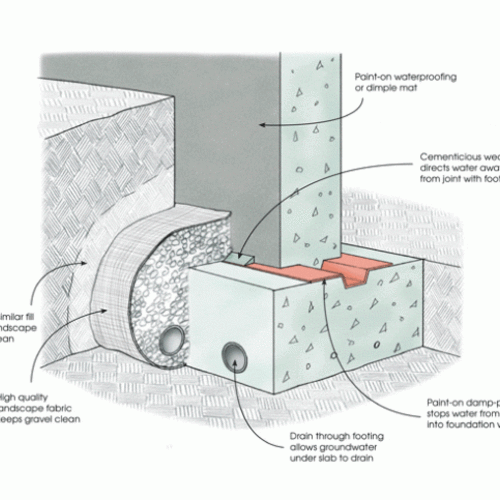
1. Eliminate unwanted moisture sources. For example: fix roof and wall or window flashing leaks; improve drainage around the house to keep moisture away from the foundation; immediately fix any plumbing leaks; and never dry firewood indoors.
-
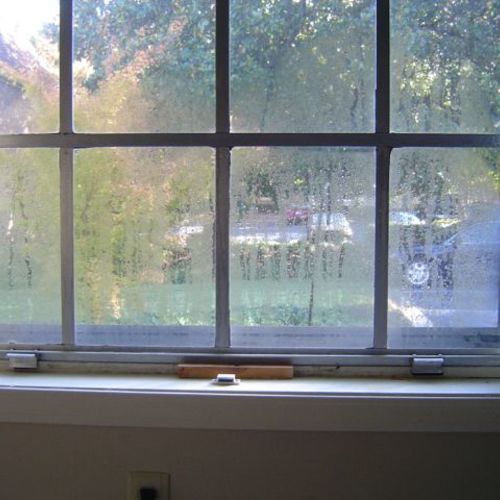
2. Improve or replace windows. Single-glazed windows provide cold surfaces where water can condense out of the air during the winter months. This water can collect at the sill or on the frame and result in mold growth or decay. Adding a storm window or replacing single-glazed with newer, high-performance windows should prevent condensation.
- 3. Provide mechanical ventilation. In most homes, mechanical ventilation is recommended to ensure adequate fresh air exchange; this is especially important in a house that has been insulated and weatherized. At a minimum, use a high-quality, quiet, outside-venting bath fan; the fan can be set up to operate intermittently or whenever the relative humidity is above a certain level. Better than relying on a bath fan is installing a whole-house ventilation system, such as a heat-recovery ventilator (also called an air-to-air heat exchanger).
- 4. Keep an eye on relative humidity levels. An inexpensive digital humidity meter (often measuring both temperature and humidity), such as those available from Radio Shack, can help you identify problem conditions.
If mold or decay is found in a house, along with determining where the moisture is coming from, eliminating that source, and providing mechanical ventilation, it’s important to thoroughly clean any moldy surfaces. In some cases, it’s necessary to replace materials that have gotten moldy or where decay has begun.
To learn more about building science, moisture, and mold problems, consider attending the workshop “Got Mold? Energy Efficiency and Moisture Management” being taught by my colleague Peter Yost next Saturday, October 4th. Peter’s workshop is part of the first annual Brattleboro Area Family Energy Fair being put on by the Brattleboro chapter of Habitat for Humanity. Other workshops and exhibits will cover home energy audits and solar energy systems. For information, call Gini Milkey at 802-254-2040 or visit bratthabitat.org.
Weekly Newsletter
Get building science and energy efficiency advice, plus special offers, in your inbox.





0 Comments
Log in or create an account to post a comment.
Sign up Log in