Musings of an Energy Nerd

How to Build an Insulated Cathedral Ceiling

Posted on November 18, 2011 by Martin Holladay, GBA Advisor

Although the GBAGreenBuildingAdvisor.com website already contains many articles on the topic, we continue to receive frequent questions about the best way to insulate a cathedral ceiling. It’s therefore time to pull together as much information on the topic as possible and publish it in one place, to clarify the building science issues and code requirements governing insulated sloped roofs.

More Energy Myths

Posted on November 11, 2011 by Martin Holladay, GBA Advisor

Energy myths are persistent, in spite of the fact that energy experts spend a good deal of time performing debunking duty. Many energy experts collect misguided energy-saving tips as a hobby, and pick the myths apart with the dedication of an 18th-century amateur scientist.

In a previous blog, I presented my own list of ten energy myths.

Guardian Fiberglass Threatens Blogger With Legal Action

Posted on November 4, 2011 by Martin Holladay, GBA Advisor

UPDATED 11/8/2011: Guardian Building Products has apologized to Allison Bailes. See full information at the end of the article.

On October 19, 2011, blogger Allison Bailes, a frequent contributor to GBAGreenBuildingAdvisor.com, posted a blog on his Energy Vanguard website about the difficulty of installing fiberglass batts well. You can read his excellent blog here: A Visual Guide to Why Fiberglass Batt Insulation Underperforms.

BEopt Software Has Been Released to the Public

Posted on November 4, 2011 by Martin Holladay, GBA Advisor

UPDATED February 1, 2012

In 2004, researchers at the National Renewable Energy Laboratory (NREL) developed BEopt, a software program that finds the least-cost solution to designing a zero-energy house. Now that the software developers — a team that includes Craig Christensen and Scott Horowitz — have spent seven years improving the program, it has finally been released to the public. The development of BEopt was funded by the U.S. Department of Energy.

Scary Stories for Halloween

Posted on October 28, 2011 by Martin Holladay, GBA Advisor

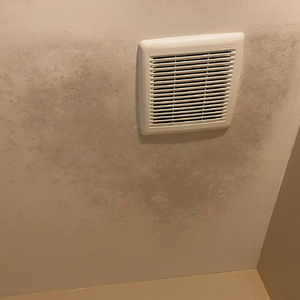
What’s scary for a green builder? Mold in the crawl space?

Naw — mold is a routine problem. What’s really scary is the end of the world as we know it.

A decade or two ago, the end of the world as we know it was a matter of concern for a few nutty survivalists in Idaho. Now it is a matter of discussion at academic conferences.

Several mechanisms have been proposed for the coming economic collapse. Some are based on New Age nonsense, while others are based on hard science.

Martin’s 10 Rules of Lighting

Posted on October 21, 2011 by Martin Holladay, GBA Advisor

Most homes use too much energy for lighting. According to the U.S. Energy Information Administration, the average American household uses 1,667 kWh per year for lighting, which amounts to 15.3% of residential electricity use. Ironically, this energy devoted to lighting is used inefficiently, so the usual result is a dim house with dark, depressing corners.

Membranes réfléchissantes: une solution en quête d'un problème

Posted on October 20, 2011 by Martin Holladay, GBA Advisor

ENGLISH VERSION
Une membrane réfléchissante est un panneau brillant ou une membrane souple qui est utilisé dans la construction. Bien que la résistance thermique (valeur R) de ces membranes est à peu près de zéro, elles peuvent être utilisées comme partie d'un assemblage en construction — par exemple, un ensemble constitué d'une pellicule radiante et d’un espace d'air — pour ralentir le flux de chaleur.

Keeping Ducts Indoors

Posted on October 14, 2011 by Martin Holladay, GBA Advisor

If you live in New England, you know that furnaces are installed in basements. But any New Englander who moves to Oregon soon learns that furnaces are installed in garages. And anyone who retires to Texas discovers that furnaces are installed in unconditioned attics.

Of course, there are many other examples of similar regional differences in construction practices. But this is one regional difference that matters. New Englanders have it right: furnaces and ductwork belong inside a home’s conditioned spaceInsulated, air-sealed part of a building that is actively heated and/or cooled for occupant comfort. , not in the great outdoors.

How To Do Everything

Posted on October 14, 2011 by GBA Team

A collection of links to dozens of
“How To” articles, culled from
Martin Holladay’s Energy Nerd blogs

UPDATED June 14, 2013

Day Three at GreenBuild: John Picard’s Vision of the Future

Posted on October 8, 2011 by Martin Holladay, GBA Advisor

Have you ever paid $8 for a movie ticket and still had to sit through commercial messages in the theater before they showed the main feature?

Commercial messages are an established part of the American way of doing business, and we’ve all learned how to sit through them when necessary. The same rules apply at a major conference like GreenBuild as at your local Cineplex. Even if you pay $700 for a ticket, you still have to sit through a few ads.

At national conferences, some speakers are invited because they are experts in their field. Others buy their way on stage.

Register for a free account and join the conversation


Get a free account and join the conversation!
Become a GBA PRO!

Syndicate content