The most recent blogs at Green Building Advisor

How to Deal With a Vapor Barrier Edict

Posted on May 6, 2013 by Scott Gibson in Q&A Spotlight

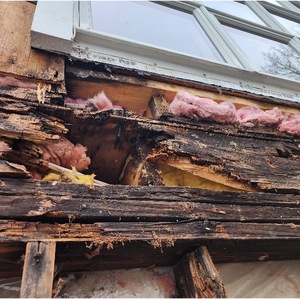
Christopher Solar had a simple plan for an addition to his Ottawa home. The one-room structure would have a shed-style roof with a cathedral ceiling and vertical board siding. Solar liked a wall assembly he'd read about at GreenBuildingAdvisor, which consists of exterior foam, batt or blown insulation in the stud cavities and airtight drywall on the interior. An interior polyethylene vapor retarder never entered the picture.

And that's where his story gets complicated.

All About Thermal Mass

Posted on May 3, 2013 by Martin Holladay, GBA Advisor in Musings of an Energy Nerd

What’s the deal with thermal massHeavy, high-heat-capacity material that can absorb and store a significant amount of heat; used in passive solar heating to keep the house warm at night. ? Since manufacturers of materials that incorporate concrete often exaggerate the benefits of thermal mass, it’s easy to get cynical and conclude that the buzz around thermal mass is all hype. But in many climates, it’s actually useful to have a lot of thermal mass inside your house. Just keep in mind that thermal mass may not be as beneficial as its boosters pretend.

What’s Different About Unity Homes?

Posted on May 2, 2013 by Alex Wilson in Energy Solutions

In my blog last week, I provided a little background on Tedd Benson and his evolution that ledLight-emitting diode. Illumination technology that produces light by running electrical current through a semiconductor diode. LED lamps are much longer lasting and much more energy efficient than incandescent lamps; unlike fluorescent lamps, LED lamps do not contain mercury and can be readily dimmed. him to found Unity Homes. This week, I’ll describe some of the features that set Unity Homes apart from both standard home construction and other panelized and manufactured home production.

All About Climate Zones

Posted on May 1, 2013 by Allison A. Bailes III, PhD, GBA Advisor in Building Science

One of the fundamental principles of building science is that buildings must be suited to their climate. When they're not, problems can ensue. Maybe it's just that they're not as efficient as they should be. Maybe it's worse.

Energy Audits in New England

Posted on April 30, 2013 by Erik North in Guest Blogs

Home energy audits in cold, northern climates are very different from those in hot climates. Different regions of the country have different types of housing stock, and there are regional variations in insulation methods and mechanical systems. In older houses, the type of weatherization work that has been performed varies greatly from region to region.

So the issues and energy priorities of northern houses are different from those of southern houses.

Jobsite Communication: Creating a Dialogue

Posted on April 29, 2013 by Vera Novak in Guest Blogs

Construction projects are becoming more complex, with increasing levels of regulations, more product choices, and higher performance expectations. And there are so many more ways of getting bombarded with information — e-mail, text, voice-mail — that we get swept up into survival mode of responding to the bits of info as it comes along.

But the danger of this multi-tasking is that it doesn’t really work: you lose sight of the big picture (only seeing one piece of the elephant), and there is really no one who has a handle on the whole situation.

Choosing HVAC Equipment for an Energy-Efficient Home

Posted on April 26, 2013 by Martin Holladay, GBA Advisor in Musings of an Energy Nerd

Why are the smallest available American furnaces rated at about 40,000 Btuh? Back in the 1960s, a house in a cold climate may have needed such a powerful furnace — or even one rated at 60,000 or 80,000 Btuh. But these days, many new homes have design heating loads that are much smaller — as low as 10,000 to 20,000 Btuh. Over the past 30 years, building envelopes have become tighter and better insulated, but U.S. furnace manufacturers haven’t kept up with the times. For mysterious reasons, they don’t offer furnaces that are small enough for today’s energy-conscious builders.

Unity Homes: Pushing the Boundaries of Home Building

Posted on April 25, 2013 by Alex Wilson in Energy Solutions

A few weeks ago I spent a half day with my good friend Tedd Benson learning about his new company Unity Homes. This Walpole, New Hampshire company is on the cutting edge of home building today, with its focus on energy performance, building science, green building, and (relative) affordability.

This week I’ll describe some of Tedd’s work that ledLight-emitting diode. Illumination technology that produces light by running electrical current through a semiconductor diode. LED lamps are much longer lasting and much more energy efficient than incandescent lamps; unlike fluorescent lamps, LED lamps do not contain mercury and can be readily dimmed. to the creation of Unity Homes, and next week I’ll go into more detail about this new company and the state-of-the-art green homes that he and his team are cranking out.

Does a Heat Pump Condenser Need to Go Outdoors?

Posted on April 24, 2013 by Allison A. Bailes III, PhD, GBA Advisor in Building Science

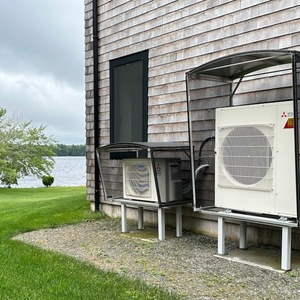
Occasionally I get asked if it's OK to put the condensing unit of an air conditioner or heat pumpHeating and cooling system in which specialized refrigerant fluid in a sealed system is alternately evaporated and condensed, changing its state from liquid to vapor by altering its pressure; this phase change allows heat to be transferred into or out of the house. See air-source heat pump and ground-source heat pump. in a garage or other room that's a buffer space. The thinking is that since the temperature may not be as hot in summer or as cold in winter, the system will operate more efficiently.

I saw recently that this same question came up in a column in Home Power magazine, so I thought this would be a good time to cover this issue (once and for all?) here.

The Worst House I Ever Audited Was Built in 2008

Posted on April 23, 2013 by Erik North in Guest Blogs

One thing that sets my teeth on edge as an energy auditor is when folks assume that a new home won’t have energy problems or be inefficient. A friend recently mentioned that weatherization and efficiency work must have a great market with Maine’s old housing stock but would be pointless in new homes. Commence ripping out hair.

Register for a free account and join the conversation


Get a free account and join the conversation!
Become a GBA PRO!