The most recent blogs at Green Building Advisor

Does a Heat Pump Condenser Need to Go Outdoors?

Posted on April 24, 2013 by Allison A. Bailes III, PhD, GBA Advisor in Building Science

Occasionally I get asked if it's OK to put the condensing unit of an air conditioner or heat pumpHeating and cooling system in which specialized refrigerant fluid in a sealed system is alternately evaporated and condensed, changing its state from liquid to vapor by altering its pressure; this phase change allows heat to be transferred into or out of the house. See air-source heat pump and ground-source heat pump. in a garage or other room that's a buffer space. The thinking is that since the temperature may not be as hot in summer or as cold in winter, the system will operate more efficiently.

I saw recently that this same question came up in a column in Home Power magazine, so I thought this would be a good time to cover this issue (once and for all?) here.

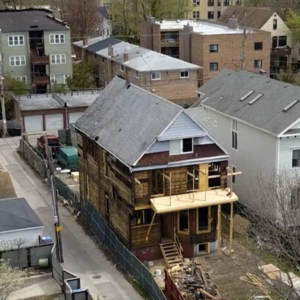
The Worst House I Ever Audited Was Built in 2008

Posted on April 23, 2013 by Erik North in Guest Blogs

One thing that sets my teeth on edge as an energy auditor is when folks assume that a new home won’t have energy problems or be inefficient. A friend recently mentioned that weatherization and efficiency work must have a great market with Maine’s old housing stock but would be pointless in new homes. Commence ripping out hair.

Does Autoclaved Aerated Concrete Make Sense?

Posted on April 22, 2013 by Scott Gibson in Q&A Spotlight

As Steven Knapp and his wife plan a new house in Atlanta, indoor air quality (not energy efficiency) is at the top of their priority list. At least that's how a recent discussion on autoclaved aerated concrete began.

Green Building for Beginners

Posted on April 19, 2013 by Martin Holladay, GBA Advisor in Musings of an Energy Nerd

Green building websites can be confusing. One site might tell you that a green home should include spray foam insulation, a tankless water heater, and a geothermal heating system. After you’ve absorbed this advice, you visit another website, where you learn that spray foam is a dangerous petrochemical, tankless water heaters are overpriced gadgets, and “geothermal” systems aren’t really geothermal.

EcoSeal: A New System for Air Sealing Homes

Posted on April 18, 2013 by Alex Wilson in Energy Solutions

Getting back to our Dummerston, Vermont farmhouse this week, I’m reporting on our use of a relatively new product for air-sealing homes: EcoSeal from Knauf Insulation.

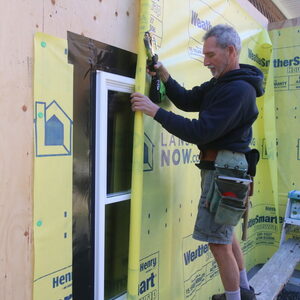
First some context: In the building science world, there is growing interest in achieving a robust air barrierBuilding assembly components that work as a system to restrict air flow through the building envelope. Air barriers may or may not act as a vapor barrier. The air barrier can be on the exterior, the interior of the assembly, or both. at the sheathingMaterial, usually plywood or oriented strand board (OSB), but sometimes wooden boards, installed on the exterior of wall studs, rafters, or roof trusses; siding or roofing installed on the sheathing—sometimes over strapping to create a rainscreen. layer of a house, with layers inside of that able to dry toward the interior and layers on the outside able to dry to the exterior. To make that work, the sheathing layer has to be tightly air-sealed.

New Videos: Sealing Ducts and Installing Dense-Packed Cellulose

Posted on April 17, 2013 by GBA Team in Green Building Blog

GBAGreenBuildingAdvisor.com has released two new videos: one on installing dense-packed cellulose in stud cavities, and the other on sealing duct seams with mastic.

Both videos were recorded in March 2013 at NESEANorth East Sustainable Energy Association. A regional membership organization promoting sustainable energy solutions. NESEA is committed to advancing three core elements: sustainable solutions, proven results and cutting-edge development in the field. States included in this region stretch from Maine to Maryland. www.nesea.org's Building Energy 13 conference in Boston.

ACCA vs. BPI: The Brouhaha Over Energy Audit Standards

Posted on April 17, 2013 by Allison A. Bailes III, PhD, GBA Advisor in Building Science

Probably the biggest news I heard at the 2013 RESNET conference this year was that the Air Conditioning Contractors of America (ACCA) and 12 other organizations had asked the American National Standards Institute (ANSI) to have the Building Performance Institute's (BPI) accreditation as a Standards Development Organization (SDO) revoked. Really!

New GBA Details for ‘Juliet’ Balconies

Posted on April 16, 2013 by GBA Team in Green Building Blog

GBAGreenBuildingAdvisor.com's library of construction details continues to expand. The latest two additions are details for second-floor balconies.

Many second-floor balconies — especially those created by cantilevering floor joists — leak heat and admit water. To avoid problems with air leakage, thermal bridgingHeat flow that occurs across more conductive components in an otherwise well-insulated material, resulting in disproportionately significant heat loss. For example, steel studs in an insulated wall dramatically reduce the overall energy performance of the wall, because of thermal bridging through the steel. , and moisture entry, use one of the following details

What is Thermal Bridging?

Posted on April 15, 2013 by Erik North in Guest Blogs

Like wind washing, thermal bridgingHeat flow that occurs across more conductive components in an otherwise well-insulated material, resulting in disproportionately significant heat loss. For example, steel studs in an insulated wall dramatically reduce the overall energy performance of the wall, because of thermal bridging through the steel. is something folks mention all the time during audits (meaning they never ask about it). But what is thermal bridging, and why do I keep bringing it up when my customers just want new windows?

To understand thermal bridging, you need to understand your home’s wall assembly and the various materials used in its construction.

Insulating Low-Slope Residential Roofs

Posted on April 12, 2013 by Martin Holladay, GBA Advisor in Musings of an Energy Nerd

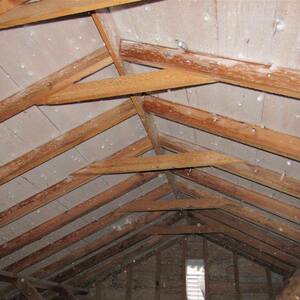
There are lots of ways to insulate a low-slope roof, and most of them are wrong. In older buildings, the usual method is to install fiberglass batts or cellulose on top of the leaky ceiling, with a gap of a few inches (or sometimes a few feet) between the top of the insulation and the roof sheathingMaterial, usually plywood or oriented strand board (OSB), but sometimes wooden boards, installed on the exterior of wall studs, rafters, or roof trusses; siding or roofing installed on the sheathing—sometimes over strapping to create a rainscreen. . In some cases, but not all, there is an attempt to vent the air space above the insulation to the exterior.

Register for a free account and join the conversation


Get a free account and join the conversation!
Become a GBA PRO!