The most recent blogs at Green Building Advisor

State-of-the-Art Windows for A New Home

Posted on January 31, 2013 by Alex Wilson in Energy Solutions

Having written about windows and emerging window technologies for longer than I care to admit (since before low-e coatings even existed), I must say that it’s incredibly fun to be building a house and having an opportunity to try out some of the leading-edge stuff I’ve been writing about.

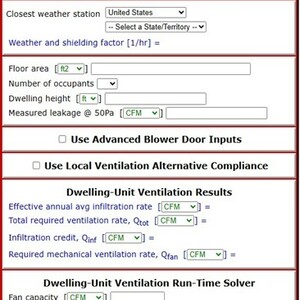
Ventilation Requirements for Weatherized Homes

Posted on January 30, 2013 by Allison A. Bailes III, PhD, GBA Advisor in Building Science

I went to school with Cajuns in south Louisiana, and fights were a big deal. They happened frequently, and when they did, a small crowd would gather. The noise would grow quickly and soon everyone in the schoolyard would run over to where the fight was happening. One day in sixth grade, we exploited this tendency and staged a fight between two shoes at recess. Sure enough — our tight circle of boys banging two shoes on the ground and making a lot of noise brought the whole school to us.

Report from the International Builders’ Show

Posted on January 29, 2013 by Michael Chandler, GBA Advisor in Green Building Blog

I recently returned from the International Builders' Show, an annual extravaganza put on by the National Association of Home Builders (NAHBNational Association of Home Builders, which awards a Model Green Home Certification.). This year it was held in Las Vegas from from January 22 to 24, 2013.

Most of us attendees didn’t get much time to cruise the show floor, because the educational resources were so rich. NAHB improved the format by adding several different levels of course offerings. They eliminated the last half-day and selected much more carefully for just the best teachers for the premium-priced educational track.

Major Thermal Bypasses

Posted on January 29, 2013 by Erik North in Guest Blogs

First, a bit about my writing: I write in longhand, whenever I have some spare time. Between audits, at lunch, after the gym, when stopping for a coffee. Then I type the notes up. The thing is that I find a lot more spare time in my walking-around day than at the home or office. To say there is a bottleneck getting these notes into electronic form is a disservice to good-flowing bottles everywhere. This is by way of explaining an upcoming sentence.

Construction Begins — and We Encounter a Few Snafus

Posted on January 28, 2013 by Roger Normand in Guest Blogs

[Editor's note: Roger and Lynn Normand are building a Passivhaus in Maine. This is the 22nd article in a series that will follow their project from planning through construction.]

Window Installation Tips for a Deep Energy Retrofit

Posted on January 25, 2013 by Joel Schuman in Guest Blogs

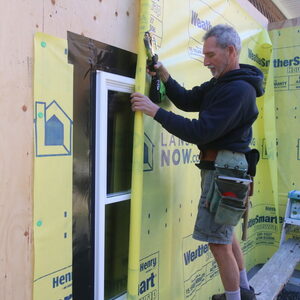
In May 2011 we began a deep energy retrofit of our old, cold, drafty house in Saugerties, New York. Because the house was poorly and cheaply built in the 1840s (apparently from scraps and salvage), we were leery of opening up the walls from the outside, lest we find that the clapboard siding and incomplete sheathingMaterial, usually plywood or oriented strand board (OSB), but sometimes wooden boards, installed on the exterior of wall studs, rafters, or roof trusses; siding or roofing installed on the sheathing—sometimes over strapping to create a rainscreen. were all that had kept the house from collapsing.

Seeking an Affordable Energy-Efficient Exterior Door

Posted on January 24, 2013 by Alex Wilson in Energy Solutions

Despite the chilly (seasonable) weather, work is progressing on the renovation/rebuild of our house in Dummerston. Last week, the three exterior doors were installed. Which brings me to one of my pet peeves: the lack of really good choices for highly energy-efficient exterior doors.

We ended up with a solution that I think will be okay, but there is a huge void in the world of truly high-performance doors. Here, I’ll describe the three doors we put in. I hope you can put up with my whining.

A Ventless Gas Fireplace Doesn’t Belong in Your Home

Posted on January 23, 2013 by Allison A. Bailes III, PhD, GBA Advisor in Building Science

First of all, let's call it what it really is. The industry likes the term “vent-free” when talking about gas fireplaces that keep all the exhaust gases in your home. I prefer the term “ventless” or, even better, “unvented.” Some people suggest “room-vented” or “lung-vented.”

Not a huge deal, but the ventless gas industry wants you to feel that you're being liberated of a burden by not having an exhaust vent. I think it's important for people to know that they're actually missing something important when they go with a ventless gas appliance.

Flash and Batt Insulation

Posted on January 22, 2013 by Erik North in Guest Blogs

One thing I’ve noticed over the years is that construction methods don't change quickly — and when they do change, the change is apt to be along the lines of current practices. That makes sense. It’d be near impossible to run a business if you were changing your technique and product five times a week.

Flash and batt insulationInsulation, usually of fiberglass or mineral wool and often faced with paper, typically installed between studs in walls and between joists in ceiling cavities. Correct installation is crucial to performance. is one example of a new technique being implemented by insulation contractors. Flash and batt is a hybrid insulation approach combining fiberglass insulation and closed-cell spray foam.

Building With Steel Framing

Posted on January 21, 2013 by Scott Gibson in Q&A Spotlight

Sal Lombardo is planning a new home in the New York-New Jersey area (Climate Zone 5) and is looking at a long list of high-performance construction options: double-stud walls, structural insulated panels, insulating concrete forms, Larsen trusses, and walls built with light-gauge steel framing.

Wait a minute. Steel framing, as in the stuff that leaks heat through the building envelopeExterior components of a house that provide protection from colder (and warmer) outdoor temperatures and precipitation; includes the house foundation, framed exterior walls, roof or ceiling, and insulation, and air sealing materials. like a proverbial sieve? Maybe, Lombardo says, it deserves another look.

Register for a free account and join the conversation


Get a free account and join the conversation!
Become a GBA PRO!