Roofs: Attics, Structure, Claddings
Roofs Keep Weather Out and Conditioned Air In
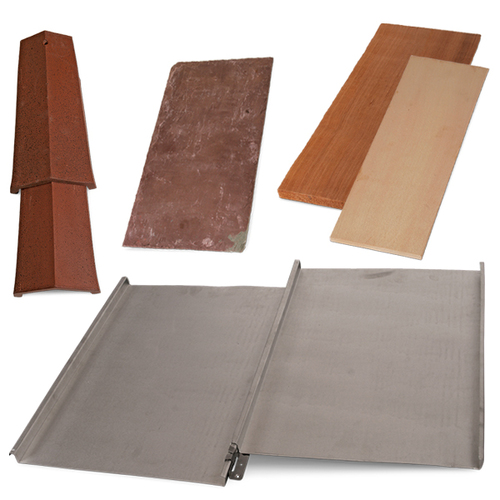
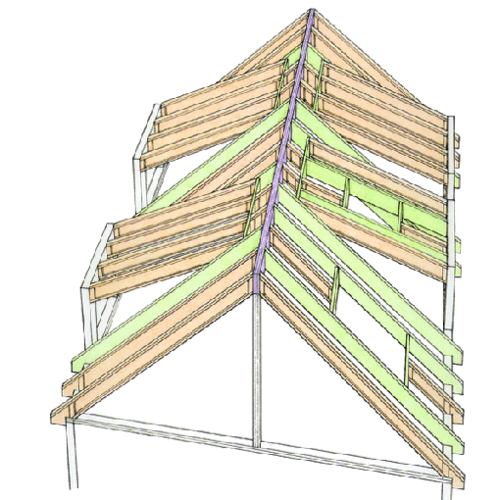
Structural ChoicesGreen roof framing: Framing roofs with 2x-stock rafters gobbles up much more wood than engineered trusses or I-joists, which are made from smaller trees. The downside to trusses is that they need to be ordered well in advance and cannot be modified on-site. Engineered I-joists require many metal framing anchors that can be time-consuming to install without a special nail gun. | Roofing MaterialsChoose durable roofing. Even if the initial cost of a particular roofing material is higher than another, roofing that stays in service for many years is the best investment. It will lower long-term maintenance costs and reduce consumption of the raw materials used to make new roofing. Certain roofing materials can help to lower energy costs by reflecting (or at least not absorbing) heat, which lowers summer cooling costs. A living vegetative roof can go a step further by cutting stormwater runoff, which scours pollution from the streets and into nearby streams, lakes, and rivers. | Attic DecisionsAttics can be vented or unvented, conditioned or not. All types can perform well. The decision depends on several factors, beginning with the amount of available headroom. |
ABOUT ROOFS
Green homes have roofs that are durable and energy efficient
Choose roofing products that are manufactured with minimal environmental impact. A roof's performance and longevity are affected not only by the choice of roofing material, but also by all of the other materials in the roof assembly and the care with which they are assembled.
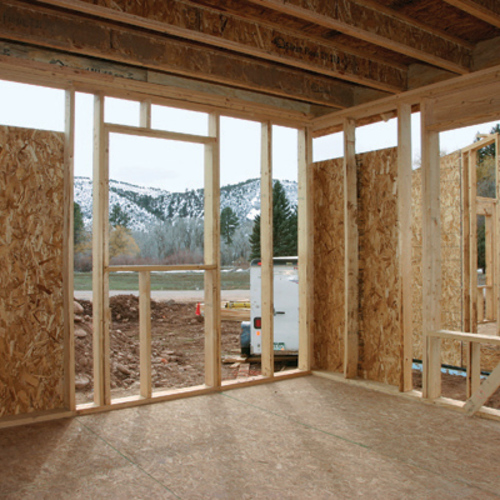
There are a number of structural options: Structural insulated panels (SIPs) combine insulation and structure and are often combined with timber framing to produce beautiful living spaces. Trusses and framing with engineered wood are far more common and less expensive.

MORE ABOUT ROOFS
Roof design considerations
It's easy to include a thick layer of insulation between the floor joists in an unconditioned attic. But if a house has a complicated roof or HVAC(Heating, ventilation, and air conditioning). Collectively, the mechanical systems that heat, ventilate, and cool a building. equipment will be installed in the attic, the attic should be unvented and conditioned. Because the roof affects the structure's energy performance, indoor air quality, and long-term durability, its design can't be an afterthought — at least not for a green home. Integrated design is a way to involve all trade contractors in design decisions before breaking ground. Choices to consider when designing the roof system:
How will the roof be framed? Roofs have traditionally been framed with dimensional lumber, but deep rafters and ceiling joists can be replaced with I-joists or trusses that are just as strong and use less wood. Building a roof with SIPs uses less wood and incorporates insulation into the process. Replacing sawn lumber with these engineered products can save time as well as natural resources.
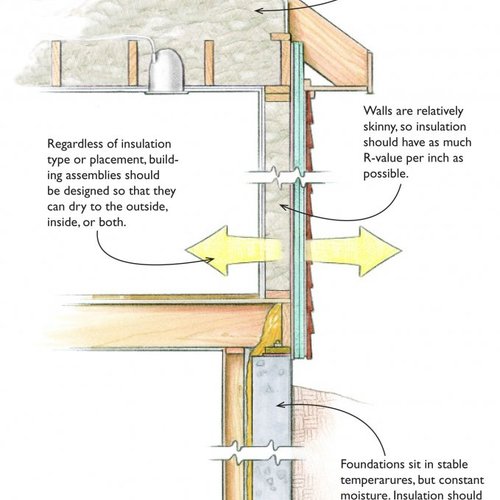
How will the roof be insulated? Insulation may be in the roof, the attic floor, or even a combination of the two. The type of insulation may affect how the roof is constructed and may guide the selection of framing and sheathingMaterial, usually plywood or oriented strand board (OSB), but sometimes wooden boards, installed on the exterior of wall studs, rafters, or roof trusses; siding or roofing installed on the sheathing—sometimes over strapping to create a rainscreen. materials. For example, radiant barrier sheathing may make sense when insulation is placed on the attic floor, but not when placed in the roof.
Will the roof be vented? Few questions have provoked as much debate among builders as this one (and whether it's the roof sheathing, the roof covering, or the whole attic space that is being vented). Ridge and soffit vents have been standard for years, but choosing among the number and variety of other methods and materials for different roof types and climates presents a real challenge for architects and builders who are creating high-performance homes.
What about the attic? Will the air handler or ductwork be located there? If so, it makes sense to condition the attic. When an attic is conditioned, the insulation line and air barrierBuilding assembly components that work as a system to restrict air flow through the building envelope. Air barriers may or may not act as a vapor barrier. The air barrier can be on the exterior, the interior of the assembly, or both. are located in the roof; in an unconditioned attic, insulation and air barrier are in the ceiling that separates the house from the attic. Choosing to condition an attic can affect roof venting, so these two considerations need an integrated approach for high performance.
What kind of roofing will be used? Durability, cost, climate, environmental friendliness, and appearance all figure into the decision on which material will be used to finish the roof. Light-colored or reflective roofing can help lower cooling bills. Vegetative roofs can also cut stormwater runoff. Local vernacular architecture may make some choices more popular. Consider how the roofing will be disposed of at the end of its useful life — most asphalt shingles end up in a landfill and will never decompose. Wood shingles, on the other hand, will decompose.
Related Topics in the Green Building Encyclopedia
Image Credits:
- Donald Blum/Fine Homebuilding #168
- John Mahan/Fine Homebuilding #185
- Daniel S. Morrison

Yahoo
Technorati
Google
Facebook
Delicious
Digg
StumbleUpon
Reddit
Comments