
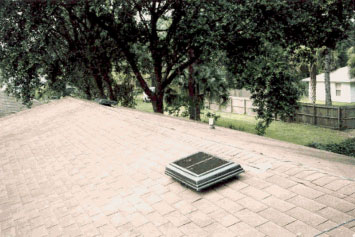
Image Credit: Florida Solar Energy Center
More Building Science


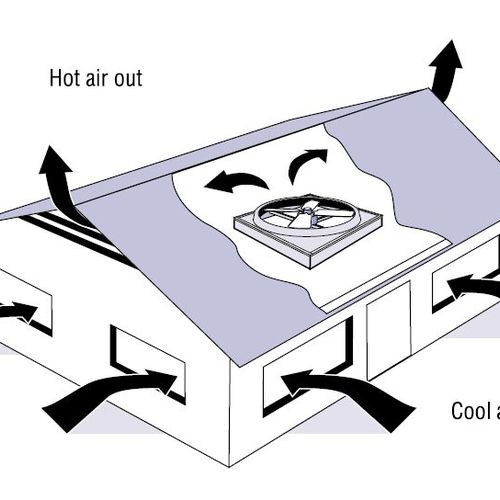
At face value, attic exhaust fans make a lot of sense: if your attic is too hot, you force more air through it to cool it down. To be efficient, you use a solar-powered attic exhaust fan. When the sun is shining and heating up your attic, that’s when the photovoltaic panel wired to the exhaust fan powers the fan. Pretty slick.
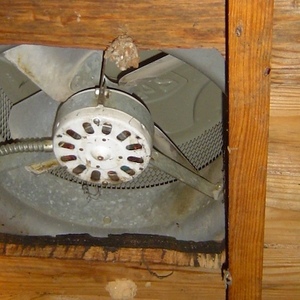
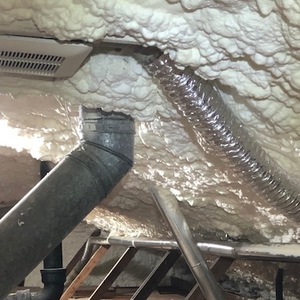
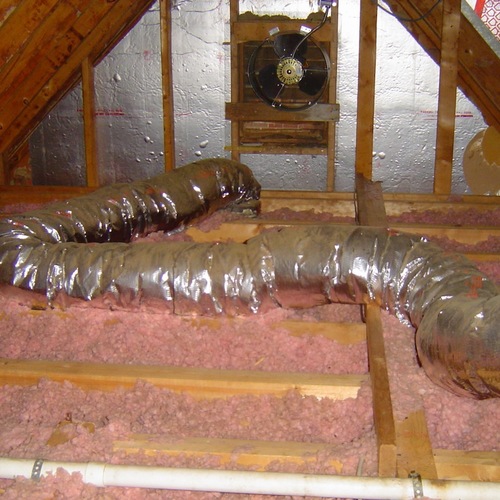
But there is a catch: why is your attic “too hot?” It is probably because living space under the attic is uncomfortable…from the less-than-well insulated and air sealed ceiling that separates the attic from those rooms. If you don’t have a continuous air seal at the ceiling plane, then your solar-powered attic exhaust fan can pull conditioned air into the attic—now that will cool it down! It can be worse than that: if that attic fan is depressurizing living space that has atmospherically-vented gas appliances or a problem with radon, you may have moved from wasting energy to indoor air quality problems.
RELATED GBA ARTICLES
Fans in the Attic: Do They Help or Do They Hurt?Martin’s Useless Products ListGeorgia Pulls the Attic-Ventilator Plug (Sort of)
INFORMATION ON POWERED ATTIC VENTILATORS
Effective Attic VentilationHome Energy: Drawbacks Of Powered Attic VentilatorsFSEC: Performance Assessment of Photovoltaic Attic Ventilator Fans
Field research supports these scenarios. Work done in 1995 by John Tooley and Bruce Davis of Advanced Energy Corp (as reported in Home Energy, “Drawbacks of Powered Attic Ventilators”) revealed depressurization issues and associated energy, moisture and combustion safety problems. And field research done by the Florida Solar Energy Center (FSEC) specifically on solar-powered attic ventilation (“Performance Assessment of Photovoltaic Attic Ventilator Fans”) concluded that the approximately $850 installed cost of the system yielded relatively modest cooling energy savings and an unfavorable payback over more than twenty years.
The bottom line? Proceed with caution. If you have a well-sealed and insulated attic floor and either no HVAC equipment in the attic or all of the HVAC equipment and ducts in the attic are well sealed, then you could install solar-powered attic ventilation with some cooling energy benefit and little potential for safety or indoor air quality problems. For far too many homes, this is a mighty big “if.”
Joe Lstiburek of Building Science Corp. puts it this way:
“In order for the fan to work the air needs to come from the outside and not be pulled from the house so this means that the attic ceiling needs to be airtight. If the attic ceiling is airtight you don’t need the fan. Your money is better spent on something else.”
For most homes, it will be “greener” to take the money you would have spent on the PV-powered attic ventilation and upgrade the air sealing and insulation in your attic and on your HVAC system.
Weekly Newsletter
Get building science and energy efficiency advice, plus special offers, in your inbox.


71 Comments
Solar attic fan and radiation
Why is the attic too hot? Not because of heat from below, but because of solar heating of the uninsulated roof! Too bad none of the authors are physicists. They seem to discount the fact that heat travels by radiation as well as by convection. An attic is heated to a very high temperature by solar heating. This high temperature will result in heat radiation from the attic into the home below. Ventilators cool the attic convectively so that the temperature is lower and the heat transfer into the home by radiation is much lower.
Dear Solar Fan,
I'm not a physicist, but I know that powered attic ventilators cause more problems than they solve. I'm well aware that the sun can make some attics quite hot. Here's the basic solution: Be sure your ceiling is carefully air sealed, and include enough insulation to provide thermal separation between your living space and your attic.
If your hot attic is making you uncomfortable during the summer, I guarantee that either (a) someone forgot to include an adequate air barrier at the ceiling plane, or — more likely — (b) the attic floor is inadequately insulated.
I've said it before, and I'll say it again: as long as you keep HVAC equipment and ductwork out of your attic, it really doesn't matter how hot your attic gets.
Depressurizing your attic with an attic fan is asking for trouble. In most homes, a powered attic ventilator will suck conditioned air from your home, raising your energy bills.
On not being a physicist
Actually, the quote near the end of the article is from a physicist. We know our thermodynamics a bit. It's not that these fans are universally a bad idea; it's just that too often they are used without a thorough understanding of building physics.
Solar Energy
Broan Solar Powered Attic Ventilators operate without fuel, waste or pollution. And because they are a totally solar-powered solution, they can count as points towards Green building. All NGOs trying to make this world green should involve in educating people to utilize products like this.
Here also we can check the updates of solar energy,
http://www.BuildEnergy.org
Attic Fans
Actually you are all right. Air takes the path of least resistance. Which means, unless there is an intake into the attic (e.g. a louver) that is sufficiently large enough (static pressure say less than 0.05"w.g.) then the attic could become negative enough to draw air from the house. And yes it is it is good to run air through the attic that will come from the outside to lower the temperature in the attic. The temp. difference (delta T) between the inside of the house and the attic will then be less, therefore less heat transfer from conduction. Increasing the insulation would be helpful also as this is part of the heat transfer equation (q=UxAxdelta T)where U is 1 over the insulation R value). For those in a high humid area a vapor barrier on the warm side is highly suggested. Don't place another vapor barrier on top of your attic floor insulation. Hope this helps. Regards.
Positive pressure?
I am not a physisist, but I would like a cooler attic, less because of heat transfer to the living space, than because I store stuff up there! I'm glad to know about the dangers of sucking air up from the living space (although no AC, so maybe not a big deal). What about drawing outside air in with a fan at one of the gable vents? Obviously you don't want to push heated air into the living space, but wouldn't a ridge vent and the 2nd gable vent, couple with a reasonably tight and well insulated ceiling, make that unlikely? I've also considered stapleing relective insulation to the rafters, but leaving it open at the top and bottom, to reduce radiant heat gain. Would that be pointless? Thanks!
THings to do besides fans to cool attics in hot climates
Any fan in the attic can pull air from the conditioned space, depending on the quality and continuity of the air barrier at the ceiling plane. If you knew that you had a good air barrier then pv-powered attic exhaust fans work. BUt without a good air barrier, you just don't know.
A radiant barrier on the underside of the rafters is a good idea in a hot climate. Remember that in order for any radiant barrier to work it must face an air space and it must stay clean (since radiation and emissivity are surface properties).
Solar Attic Fans
I find this to be a very misleading article. Begin both an engineer and attic ventilation expert, I think you owe it to your readers to present a non-biased treatment of the topic. While solar attic fans are not the “magic bullet” for every situation, the technology in general is both soundly based in physics and does offer real benefits for many applications. The key for success is in the proper installation and application of the product.
You reference a couple of articles as the basis of your claims (actually the same two articles that are always referenced). The first article by Advanced Energy talks about the potential for attic depressurization and is actually a good study on what can happen if you improperly install an AC powered fan. However if proper installation guidelines are followed and the installer allows for the proper amount of intake ventilation to support the fan, attic depressurization is both unlikely and improbable. Air flow will always follow the path of least resistance, so just allow for enough attic air intake ventilation and there is no issue. Also, most solar attic fans are designed in such a way that they cannot put up much pressure head. In layman terms, this means that a given solar attic fan is far less likely to present a negative pressure problem than the similar AC powered attic fans discussed in the study.
The second article you referenced was the Florida study on solar attic fan economics. The study found that the solar attic fan only saved an average 6% electrical usage on the home. However if you read the study, you’ll find that the home they used not only had an attic radiant barrier installed (this blocks on average at least 50% of attic heat gain), but also the home did not have HVAC equipment installed in the attic. Even with the radiant barrier installed, the solar attic fan still dropped the attic temperature over 20F and in the words of the home owner “made the house feel more comfortable”. Also for noting, the study assumed an installed cost of $850 and did not account for any rebates or tax incentives when they calculated the potential savings. Bottom line, a home without an existing radiant barrier would realize at least twice the savings (12%) of the case study home and potentially much more if their HVAC equipment is located in the attic (which is the situation for millions of homes in the south and southwest). Throw in the existing tax incentives of solar attic fans, and what you find is a completely different picture than what was presented.
Instead of assuming that solar attic fans will cause problems, why not educate the pubic on how to properly install them? This is simply another tool that can be used to reduce energy consumption and when compared to alternative methods of reducing attic temperature, the economics actually favor solar attic fans.
This article is misleading
Hi Travis - thanks for your comments and perspective. You made me go back and re-read what I had written. Sorry, but I don't think it is misleading, inaccurate, or biased. I did not say don't use solar-powered attic exhaust fans, but to "proceed with caution." And I did say to carefully compare this investment to improvements to the building envelope.
If I could be convinced that everyone understood building physics as well as you do, and that the installer of the PV-powered attic exhaust system ensured that there was no potential for depressurizing living space, I would be more generally supportive of the technology's use. But some manufacturers of these systems do not even mention the issue of air sealing the ceiling plane or depressurization potential. That is my concern and why I would like GBA folks to understand the issues as they consider this technology.
Path of Least Resistance
Attic airflow is another consideration to be considered. Improperly placed, an attic exhaust fan (PV or AC) could suck air from an adjacent ridge vent or gable vent and not be as effective as desired in removing hot air from remote areas in the attic. We depend so much on soffit vents, but it doesn't take long for these to become blocked by dust, cobwebs, and other attic "schmutz" seriously lessening their designed effectiveness. Great discussion, folks.
Hot air !
Dear Mr Yost,
I can't argue with "Fans that pull hot air out of attics can cause more problems than they solve" but you didn't do a good enough job of defining the "can".Perhaps you ought to have swapped "can" for "might" and we would have all been happier.
Still, you generated great input from the people commenting above ... so overall a good job.
Solar Powered Attic Fan
Some of the problems that are envisioned by these so called "experts" are laughable, but could possiby occur in rare, isolated cases. If your attic has properly sized and properly installed ventilation openings, then an exhaust fan will do quite well in pulling out the air heated up by the solar radiation hitting the roof. The attic space will be much cooler throughout the day, putting less load on the living space AC system. If the AC system ducting runs through the attic and leaks to the extent that a ventilation fan will pull a significant amount of the AC air from the living space, the attic is probably being cooled by so much leakage and doesn't get warm. This is a loss of efficiency in the home AC system. But if the attic gets hot and remains hot throughout the day and evening, a solar powered fan is just the ticket. It will keep the attic much cooler throughout the day and cool off the attic with the late afternoon, early evening lower air temperature. This reduces the load on the AC system by reducing the amount of heat that radiates from the attic into the living space. Even if your attic is insulated well, a significant amount of heat from the hot air in the attic will still enter the living space. Being able to lower signigicantly the attic temperature, without any expenditure for the power required to drive the ventilation fan, is a good idea and will save you money.
Solar powered fan for concrete roof
I think that solar attic fans are not the solution for every situation, but the technology can offer benefits for many of then. I am living in Puerto Rico where 90% (+/-) of the houses are made of concrete, including the roof, and where the temperature is between 80 and 95 all the year . Most of the household uses air conditioning only during the night, then, a solar fan could help to maintain fresh the inside of the home during the day. A technology that people start to adopted is to paint the roof with white color sealer's , that prevent water leakage and the increase of temperature of the concrete by the sun light.
Attic heat turbines that produce energy ?
I am looking for alternative energy generating solutions. Partly to have multiple systems in order to be able to reduce my energy bills. I see Solar Panels and wind turbines are quite common. Is there anything out there which can use the hot air movement to generate useable energy for home use?
Hot attic air
Ricardo,
Every few years, some inventor comes out with a new gadget to harvest hot attic air. There's one on the market now that tries to use hot attic air to preheat domestic hot water.
Take my word for it: all of these gadgets cost far more to install than the value of the energy could ever justify.
You saved 20% on electric bill
Good to hear. I don't doubt that solar-powered attic exhaust fans can significantly lower vented attic temperatures in hot climates. My concerns are two fold: one, is the fan the best bang for the buck and two, do you have a good enough air seal at the ceiling attic plane that your attic exhaust fan is not depressurizing your house. Danny Parker at the Florida Solar Energy Center has done research to show that these units can save money. I just wish that all of the manufacturers made it clear under what conditions these units are the most cost-effective option and the safe and healthy choice. My support of solar-powered attic exhaust fans is "heavily qualified" at best. If you have any combustion appliances in your home that are atmospherically-vented, just make sure they are functioning properly when your attic unit is operating.
what do you think about the
what do you think about the solar attic fans that have high cfm output like "attic breeze" and "snap-fan"? are these viable products, or do you lump them all in the same category?
thanks
Attic Breeze and Snap-Fan
The fans you ask about are attic exhaust fans, the subject of the blog. We do not recommend their use unless there is a continuous, comprehensive air barrier at the ceiling plane that would keep the attic exhaust fan from depressurizing living space. Further, we recommend that the total cost of the attic fan exhaust system be compared to other approaches to reduce heat gain in the conditioned space from the vented attic, as discussed above.
comprehensive air barrier
how do i know whether or not i have a comprehensive air barrier?
Comprehensive air barrier
You have a energy technician do a blower door test on your home, a good investment all around. Look around the GBA website abit (type air barrier in the search box) or start here:
https://www.greenbuildingadvisor.com/blogs/dept/musings/airtight-wall-and-roof-sheathing
or here:
https://www.greenbuildingadvisor.com/air-leaks-waste-energy-and-rot-houses.
Thanks Peter. Good Info. So
Thanks Peter. Good Info. So under the assumption that a home has a good air barrier, are high CFM solar vents viable in your opinion? The reason I say high CFM is that most of what I've seen don't move much air yet make bold claims.
Still an option
Have you looked at the FSEC report cited in the blog? I would base my decision after looking over that report and comparing it to your situation.
FSEC Report
interesting. although it's hard to tell whether the 800 cfm was for each fan or both combined. if it was 800 cfm per unit, that seems a bit over sized for 1,000 sq. ft house. nonetheless it did drop the attic temperature significantley given the existing radiant barrier. 6% doesn't have me cutting back-flips, but it would have been good if the study didn't have the radiant barrier so we'd get a more accurate assessment of pv vents.
what about other bennies?
Solar exhaust fans also claim to extend roof shingle life, and remove moisture that builds in the attic? Any truth to those claims?
hot summer
I am thinking of installing a solar attic fan, but with my windows open on summer evenings, I don't think I would have any negative pressure potentials. Just cool my attic, which would cool the top floor of my house. I have not AC, HVAC, or gas fired appliances.
No worries with negative pressure
Again, do a comparison of the level of effort and expense involved for the attic fan and improving the air tightness and thermal insulation in your attic. Depending on your climate, you would need to factor in the benefit of the attic fan compared to the air sealing and insulation during the winter when the fan won't help the reverse temperature difference but the air sealing and insulation will.
Solar Powered Fans are bass-ackwards
The thing that bugs me about the solar powered attic fans is that they only run during the hot part of the day. Trying to cool down an attic with hot air is less effective than using cool air which you have plenty of at night. Also, the problem of pulling conditioned air out of the house is moot at night in many climates, because the ambient air temperature drops to 75F or less.
Peter, I think most folks faced with evaluating attic air sealing vs. installing a hard-wired fan will choose the fan. It's a much simpler task. But as you say, it doesn't help in wintertime.
Whole House Fans
Any thoughts on or research done on the use of whole house fans? Any links or thoughts would be appreciated.
This works like a charm
My +125 year old, 2-story home has a mansard roof. The height of the attic is approx 3ft. The plan area is 18x 33ft. Fifteen years ago, we gutted the upstairs, insulated, and installed a vapour barrier.There is a ventilation channel between each vertical roof joist. These empty into the attic. There is a single 'whirlybird-type attic ventilator on the flat roof area.
My wife and I decided to go green a few years ago so we ditched the old air conditioners. This is when we noticed how hot the upstairs got even with window fans turned to max. It would take until the wee hours of the morning to bring the upstairs room temperature down to the outside air temperature. It reminded me of when I work at a GM forge. This was unacceptable.
I read somewhere online that a green cooling strategy was to make sure that the attic cavity temperature was as close as possible to the outside air temperature throughout the day. In our situation it meant constantly removing air from the attic since the flat roof was naturally heating up and radiating heat into the low volume attic cavity. And then into our upstairs rooms (despite the 6" of batt insulation).
As money was tight I couldn't afford to install an electric roof vent. Solar roof vents were even more expensive. As a short-term solution, I rigged up a 10-inch portable fan directly below the whirlybird vent and plugged it into a mechanical timer. (This is used just for the summer months.
Guess what? It works like a bloody charm. Even today with the sun beaming down and the outside temperature in the neighbourhood of 33degC (91degF) the upstairs is still the same as the outside air temperature. And in combination with the window fans, the room temperature will match the outside temperature as the evening progresses. Yes, on the exceptional hot days the evening temperatures are still hot, however, most of the time our upstairs is remarkably cool by bedtime or earlier. I cannot believe how well a "powered vent" works in my situation.
What I do wonder is if a solar vent can displace the same volume of air as my portable house fan.
My
T
Solar attic fans
I agree with Travis Hipp and I'm definitely not a physicist, here's my input. Attic fans can and will work with proper sizing and airflow, also solar attic fans at there peak performance can only move on average of 1200 CF/m that's nothing, but enough to do something!
Thank you all
hurricane question
Any thoughts on the value of having a solar powered attic vent when the power goes out for an extended period - such as in the wake of a hurricane.
Response to D. Rev
D Rev,
Since a solar-powered attic fan is a solution in search of a problem, I have to ask: what problem would you be trying to solve in your post-hurricane scenario?
I'm guessing that you are afraid that your house will be hot. (The air conditioner will be off.) If your attic makes your house hot, the solution is: (1) Seal the air leaks between your attic and your house, and (2) Install insulation on your attic floor. Then you'll be fine.
If you want a way to stay cool during a power outage, put the solar panel in your front yard and run a wire from the panel to a fan in your living room. Then you can sit in front of the fan and feel the moving air on your face.
Powered Attic Vent
We recently had our roof replaced and instead of having the 'whirley birds' installed again, we opted for powered attic vents. We have a total of three installed. I live south of Dallas so have plenty of hot, humid weather to contend with. Since the installation, I've noticed the downstairs to feel more humid but still registering at 76 degrees. We have a masonry fireplace with no glass doors and was wondering if the attic fan was pulling air down the chimney and into the house. I decided to tape the fireplace opening shut with some plastic and could see how the plastic was being sucked inward into the family room. Do we have a potential problem here and/or should we consider having the powered attic vents removed and the 'whirley birds' installed after all? Thanks for your help!
Response to Carolina
Carolina,
If the plastic is being sucked inward toward your living room, that is a sign that your house is under negative pressure. Your attic fans could certainly be the cause of the problem, although other factors (including problems with HVAC ducting) can also cause depressurization.
You need to take three steps:
1. Determine the cause of the depressurization.
2. Seal the leaks causing the depressurization (for example, leaks in the ceiling under your attic, or leaks in your HVAC ducts).
3. Seal your fireplace or chimney to prevent outdoor air from entering your living room when the fireplace isn't being used.
You will probably have to hire a home performance specialist (for example, a BPI-certified or RESNET certified home rater) to help diagnose your problem.
Powered Attic Vent
Martin, thanks for answering so quickly! I will certainly see about hiring a home performance specialist.
Sell-Outs?
If you guys are so oppossed to solar vents, why do you let them advertise on your site?
Google serves the ads
We don't decide who can advertise on Green Building Advisor; the ads are served through a Google algorithm.
For more on our advertising policy, see this page: https://www.greenbuildingadvisor.com/blogs/dept/green-building-blog/editor-s-note-about-advertising-green-building-advisor
Solar-powered attic vents
OK, I'll bite. Full disclosure: we install solar-powered vents as part of our product offering.
Your article correctly & predictably zeroes in on ‘sealing & insulating’ but gives scant mention to proper air intake requirements, which is also a preventative for depressurization. For all the reasons you state, and also to preserve motor-life, we insist on bringing the attic intake-venting up to the proper specs. We understand negative pressure and do our best to avoid contributing to it. Thank you for advocating a careful approach; we'll continue to be careful.
The Florida study is a good starting point. However, it was done on a ranch on a slab, and as many have mentioned, with a radiant barrier on the rafters and an attic-mounted HVAC unit. It did not address the tremendous variety of building styles, attic volume, the science of 'delta-T', multiple stories, the importance of air intake, etc. A much more comprehensive study—which might include proper controls on CFM, available intake, sizing, pitch, roofing material, # of stories, geography, shingle-life, tax credits, hvac zoning, etc.—might give a more complete picture.
For example, in addition to attic-heat reduction (the biggest area of energy savings), no mention was made of any of the other benefits/payback from this green technology, which strengthen its case:
--Counteracting cold-weather condensation (e.g., from bath fans or heat rising through inadequate insulation) which can/does lead to mold & mildew problems. Wet insulation is conducting heat and cold, not insulating; Dry insulation saves on heating costs.
--Extending the life of roofing: Your dismissiveness of the real problem of attic heat is curious (‘If the attic ceiling is airtight you don’t need the fan’). The composition-shingle manufacturers are now pro-rating their warranties, tied directly to attic ventilation. Isn’t that a measurable plus?
--Reduced ice damming—yes I know, usually another insulation problem.
--Tax Credits—same as solar, wind and geothermal. No limit, through 2016, includes the install.
As to "Money better spent,” you suggest “take the money you would have spent on the PV-powered attic ventilation and upgrade the air sealing and insulation in your attic and on your HVAC system.” PLEASE tell me where you can have the same dramatic results in comfort and efficiency—especially on two-story homes—for the $600-$850 for a solar-powered fan! In truth, it takes thousands of dollars in 'sealing and insulation' (not to mention upgrading the HVAC) just to counteract the reality of 'delta-T'.
Proper attic ventilation is a legitimate part of a green solution. Maybe the solar-powered attic vents can be seen as a stop-gap until a homeowner can afford the kind of expense for the "right" solution.
The science does not condemn these fans, and truly, neither did your article. It was just "kinda" negative, and zero'd-in on the holy grail of 'sealing & insulation'.
We are Happy
I live in Las Cruces, NM in a newly built home of around 2,000 square feet. The temp's here during the summer range from 95 - 105 every day of the summer. I decided to go green in an attempt to cool our flat-roofed home. I first coated the flat roof with LO-MIT (aluminum/silicon based thermal coating. It helped a bit. I then installed radiant barrier foil within the attic... That also helped a bit. My garage (non-cooled) air temp never got above 88 degrees F. I then decided to try using two Honeywell 10w solar powered attic fans. The day before fan installation my garage temp was 88 with an outside temp of 103. The day after installation the temp outside was also 103 degrees F, but my garage temp was at 82 degrees F. A six degree drop due to the introduction of the fans.
My ac is on the flat roof with all the ducting in the attic. I am of the opinion that I should see a substantial drop in my ac costs. The Sam's Club Honeywell fans, plus tax, only run $200 each and have a 5 yr warranty on the motor with a 20 yr warranty on the solar panel.
The only real precaution I took is to make sure that I had at least 2 times passive ventilation rooftop openings vs the diameters of my fans. This should be sufficient in ensuring that we will not have any major depressurization problems.
Response to Peter M
PeterM,
Two observations:
1. You never told us how much insulation you have on your attic floor, or what kind of insulation, or whether you have made any attempt to seal air leaks under your attic insulation.
2. Your $400 worth of fans are ventilating your attic with 103°F air.
Venting 160 degree attic air with 103 degree outside air.
The outside air was 57 degrees F cooler that the 160 degree F attic air. The attic floor is well insulated with about 6" blown in. House is pretty airtight but did not bring in anyone to test it.
Bingo! There's your problem
Peter M,
Loose-fill fiberglass has a lower R-value per inch (2.0 to 2.7) than any other common insulation product. If you have 6 inches of blown-in fiberglass, you've got no more than R-16. That's dreadful.
You're in Climate Zone 3, where the code calls for attic floors to be insulated with a minimum of R-30 insulation. Your measly 6 inches is a long way from meeting the minimum code requirement.
Imagine how much more comfortable your house would be if you had installed $400 of additional attic insulation instead of $400 of unnecessary ventilating equipment.
I am cooking the attic NOT my house
I did not measure the insulation. I can if you like. It is to code, i.e. R-30, I was at the builidng site when the inspectors went through it.
Imagine the decrease in my AC costs with the ac ducting in the attic residing in a much cooler attic environment. I am looking to decrease my ac cycle times. Dropping the temp in the attic will do that.
Cose when house was built
Just want to correct your impressions. Our climate zone here is Zone 7-8 not Zone 3. Also, I checked with the builder here (now a friend). He claims I have R-42 in the living areas (about 17") and R13 over the garage (that is where I came up with the lower insulation thickness), i.e. my crawl space entry is in the garage. My garage walls have R11 and the living area walls have R13. All in all a very well insulated executive home on a golf course.
Climate zones
PeterM,
Your local code evidently uses a different climate zone map than the DOE. Using the DOE climate zone map, which is referenced in the International Residential Code, I believe that Las Cruces, NM is in Climate Zone 3.
If you have ducts in your attic, you are quite right that your attic ducts can get very hot. I strongly urge you to improve the insulation on your attic ductwork.
Ducts are wrapped
I am an avid gardener. I and most people, I believe, go by the climatic zones that gardeners use. My zip is between Zone 7 and Zone 8..
All my heater/ac ducts are wrapped with super thick glass insulation already.
What I was fighting was the temp's in the attic that can reach over 160 degrees F during the heat of a summer's day.
Hot attic woes
Peter,
You wrote, "temperatures in the attic can reach over 160 degrees F during the heat of a summer's day."
With all due respect, that's why your ducts probably need to be protected with more insulation.
I say 'attic' but mean 'crawl space'
In the Southwest most homes have flat roofs and crawl spaces that only an ant can crawl around in. There are few true attics here. You have to make sure things are done at the time of construction. Mine are insulated now, but if I had it to do over again I would have doubled the insulation on the ductwork. However, I am finding that the solar powered attic fans are doing there thing. I will know for sure when I can compare electric bills over the next couple of months compared to last year.... The drop in the garage temp is only taken as a leading indicator that the fans are going to make a significant difference. I will update you as the data come in. :)
Question for the attic fan proponents
I assume you would agree that attic fans move heat through convection.
I think we would all agree that the majority of the heat in an attic during the summer is from radiation.
Are you aware that radiant heat cannot be moved via convection?
Danny, Danny, Danny
Danny,
Heat does not come with name tags. There aren't three kinds of heat in your attic, each separated into three cliques like teenagers at a party. Heat is heat.
Fans move hot air. If (this is a big if) there is a source of cool air to supply makeup air, moving hot air out of a room can lower the temperature of the room.
Just because the temperature of an attic is increased due to radiant heat from the underside of the roof sheathing, doesn't mean that the warm objects in the room have been forever branded with a special sign called "radiant heat." The objects are simply hot.
Interplay of forms of heat transfer
I think that the dynamic interplay of the three forms of heat transfer is beautiful and bedeviling, and critical to understanding how buildings work.
We call hydronic pipes in a floor "radiant" heat, when at best only 60% of this type of heating systems transfer of heat can be specifically attributed to radiation.
The only place that radiation takes place in isolation is outer space--here on earth the transfer of heat is a constantly shifting dance between conduction, convection and radiation.
Yes - moving hot air out of a room will lower the temperature
Yes Martin, I am aware that all three types of heat do work together and did not completely explain myself – was mainly trying to make a simple point to the self proclaimed physicist that posted earlier that he did not understand heat transfer. But I think my Thermodynamics teacher would agree with my statement. I think we will all agree that ventilation of the attic air space will reduce the attic temperature slightly but is unrealistic to think that it will lower the temperature 50 degrees as some have suggested. If the attic is significantly cooler it is more than likely from the conditioned air of the house entering the attic not from the ventilation.
Dr. Joe and others can explain more eloquently than I but have heard several people speak to this as of recently. Some research shows that 90% of the heat in the attic is radiant heat. Sun heats ups the roof deck – radiation heats up the ceiling joist and insulation – at this point the conduction and convection take over – this is where ventilation can help but it is a small percentage of the overall heat gain in the attic. The infrared spectrum is un-phased by the ventilation - it is constantly radiating to the ceiling components. Research has shown that ventilation has little effect on the temperature profile within the ceiling insulation and that the reduction in heat flux is also insignificant, mainly due to the fact that radiant heat cannot be moved via conduction.
solar attic fan advantage
Solar attic fans come on early in the morning. The air temperature is 15 degrees cooler than the heat of the day. My attic never gets hotter than outside. Plus the shade trees cool the house as well. I have gable as well as soffit vents. I have insulation and a radiant barrier. The smells are gone, the upstairs is cooler, and my bills have gone done 53.00 a month. I think if the professor actually bought the product he would change his mind.
solar attic advantage
Please keep in mind that we are not saying that solar-powered attic fans are a universally bad idea. We are saying two things:
1. be sure that attic exhaust fans don't create negative pressure and pull conditioned air out of the house and into the attic or worse, create a backdrafting situation with atmospherically-vented gas appliances.
2. weigh the cost and benefits of attic exhaust fans versus better attic air sealing and insulation.
attic temperature with solar attic fan
I just measured the outside air temp today at 2 pm was 88 degrees the attic air temperature was 84 degrees. Of course i had to weigh down myself so that negative air pressure did not suck me into that 1250 cfm solar attic fan when i took the reading.
Ken,
are you saying your
Ken,
are you saying your attic temp is lower than ambient?
Green Living
Hi all -
Found this site during a search for Solar-powered Attic Ventilators. We installed a Power Attic Ventilator in our old three story townhome and it greatly cooled down the 3rd level of our home during the Summer months. We were really pleased with its efficiency.
Now that we are living in a Rancher, moved here 5 years ago, we've noticed that our rooms get hot during the hottest part of the days. Our home faces Southeast and gets exposed to the sun just about all day long. The main living part is on the west side of the house and those rooms tend to get warmer. So we are thinking about getting a power attic ventilator installed - well, two of them, one for each side of our house. Our house is bisected by the two story great room. It divided the attic into two separate spaces.
Now when we had our house built, we had it built to be green. We had 2 x 6 walls instead of the standard 2 x 4 walls. I also had a Direct X Geothermal HVAC System installed, with the Superheater for our Hot Water. That alone saves us about 50% on our electric bills.
Our attic is ventilated by roof ridge vents and by those soffit vents all around the roof's edge. And as far as we know, the insulation in the attic is up to code; everything was done properly. There is no duct work in the attic, and our HVAC system is all in the basement.
We do have one room on the second level, a bonus room the put above our garage, and that room gets dreadfully hot even though the A/C is on full. The problem is that the roof on that room faces the sun full on most of the day.
That's why we thought the Solar Power Attic Ventilators would do well in our home, until I read this series of articles. Now I don't know what to believe. I do know that it helped us quite a bit in our old home. I'm hoping it will help this new home of ours. We want to keep it energy efficient, like it is now. But....
Would it work in our home? or would it be a waste of money? To keep that bonus room cooler, or should I just buy a window air conditioner unit on end-of-season clearance?
New ranch and green living
Hi Ken -
Good question, but I have a question for you first: has your home been blower door-tested for its air tightness? That would be a good place to start. If it has not been, then I would go ahead and have it tested, asking the technician to qualitatively assess the air tightness of your ceiling plane (with a smoke pencil), paying particular attention to the typical air leaks as identified in the EPA Energy Star Thermal ByPass Checklist (http://www.energystar.gov/ia/partners/bldrs_lenders_raters/downloads/Thermal_Bypass_Inspection_Checklist.pdf).
We recommend that you make sure that you have a continuous air barrier at your ceiling plane before installing an attic exhaust fan. And if you attic is not well insulated or air sealed, start there first before considering the exhaust fan.
Feedback from the Manufacturer
It’s amazing how long this debate over solar attic fans has carried on. You would not think that the suggestion of using an “alternative” approach to keeping heat from entering the home would be met with so much controversy. Peter, I think I can say we all appreciate you keeping an open mind and advocating the importance of intake ventilation before considering active ventilation. As a solar attic fan manufacturer, we too promote the importance establishing a continuous air barrier before considering our products as a potential solution. Mr. Holladay, being a strong opponent of attic ventilation, might consider taking the same objective approach when addressing these legitimate questions that consumers have voiced.
While there is technically nothing wrong with the advice he has provided in this blog, it lacks objectivity and supporting data. Solar attic fans are simply another tool that can be used to keep attic heat from entering the home. The choice as to which tool to use for your project depends on the cost of implementation and resulting payback. We do not dispute that creating a sealed attic with upgraded insulation can prevent heat from entering the home; this is a viable option in its own right. However when the cost of installing this solution is weighed against the solar attic fan option, many consumers will find that installing a solar attic fan is actually more cost effective… it all depends on your specific situation.
Again solar attic fans are not the solution to every attic problem, but giving blanket advice to simply upgrade attic insulation isn’t either. If it’s less expensive for the consumer to install upgraded insulation for their project, then by all means they should take that approach. Alternatively, if installing a solar attic fan gives the best economic incentives, then the consumer should consider ventilation as the appropriate solution. Based on solid physics, both approaches when installed properly will lead to the same result of keeping heat out of the consumer’s home; it really all comes down to which option is going to give you “the most bang for your buck”.
Why not another study?
If the opinions here are based on a 15 year old study, why not do another study? You guys don't need the Florida people to do scientific researsh. I'm certain between Green Building Advisor and Attic Breeze there could be an impartial result that would settle this debate for good. If the ultimate goal is to have a more environmetally concious public, then accurate and updated scientific data would be more effective than opinions. The debate is good, but the public needs education or we'll just end up with the staus quo.
Response to Anonymous
Anonymous,
1. GBA has no budget for research, unfortunately. Perhaps some day.
2. Clearly, the manufacturer of a powered attic ventilator is not the ideal agent to be conducting such research, since they have a vested interest in the outcome.
3. There are lots of research studies, and plenty of energy modeling programs, that show that attic temperatures have very little effect on energy use, as long as (1) the attic is adequately insulated, and (2) there is a ceiling air barrier, and (3) there are no ducts in the attic.
Martin,
I wasn't suggesting
Martin,
I wasn't suggesting that you use Attic Breeze's data. Of course it would be biased. I bet they would supply the units though. They are the only manufacturer that has openly challenged the debate. The American consumer is wanting to make energy adjustments but are unclear where to begin. Read KenRN, perhaps solar ventilation would have been the most practical solution for him but after reading this blog he's left still wondering and perhaps even threw his hands up. And he says he was satisfied with the solar vents he once had until reading this blog. I appreciate being informed of gimmics that don't work and decieve the consumer but that's certainly not the case from my experience with solar ventilation . I've reduced my electric costs every month this year from 15%-35% using solar ventilation. For me that's enough of a case study. But for KenRN it may be meaningless and he'll probably never read this unfortunately. I just think the consumer would be better served with solid data concerning solar ventilation.
Response to Anonymous
Anonymous,
Here at GBA, we strive to provide homeowners, builders, and architects with the best, unbiased answers to technical questions. Other readers (and manufacturers) are free to post their opinions, so it's not surprising that conflicting opinions can be found on these pages.
If a GBA reader ends up confused by these conflicting opinions, I guess that's the price of allowing an open forum and discussion. However, that won't change GBA's policy. We will continue to try to provided good, unbiased advice to all technical questions. We are aware that not all readers will take our advice, however.
Martin,
I'm certainly not
Martin,
I'm certainly not taking anything from the advise here except air tight ceiling planes rule and solar vents suck. With all due respect, it sounds biased. You didn't offer KenRN any advice. You didn't even respond to him. And I haven't seen you respond yet to Attic Breeze. It shouldn't be exceptable to you to have people left confused. What good comes from that? The topic of this discussion is , "Are solar attic vents green?" You present your arguement as if they aren't a viable green solution. If they're not, then prove it scientifically with more than one case study and a few opinions.
Response to Anonymous and KenRN
Anonymous,
You're right -- I failed to respond to Ken RN. We get so many questions here at GBA that sometimes a few questions slip through the cracks. An answer to KenRN follows.
I just re-read the post from AtticBreeze, a manufacturer of solar-powered attic ventilators. Since AtticBreeze didn't ask any questions or seek any advice, I don't feel the need to respond.
Ken RN,
You asked, "Would it [a solar-powered attic fan] work in our home?"
Here's my answer: If you can lift the attic insulation to check for air leaks -- or better yet, hire a contractor to perform a blower-door test -- you can determine if your ceiling is tight or leaky. If your ceiling is leaky -- most ceilings are -- then powered attic ventilators can depressurize your house and increase your energy bills. If you have verified that your ceiling is tight, it is safe to install a powered attic ventilator.
You also asked, "Would it be a waste of money?"
Yes, it would be a waste of money. Your money would be better spent on air sealing work or (if necessary) additional attic insulation.
"Should I just buy a window air conditioner unit on end-of-season clearance?"
Once you have improved your home's air tightness and insulation, there are other causes of overheating to investigate. The most common cause of summer overheating is unshaded windows with the wrong glazing. Ideally, your windows should be shaded or should be equipped with low-solar-gain glazing.
Once these steps are taken -- if you are still uncomfortable, you probably need an air conditioner.
Uncle...
Just one last thing
Uncle...
Just one last thing I'll share. The estimated reduction of my carbon foot print this year from solar powered ventilation is around 3 tons. In my opinion, that's green.
Kind Regards
My Appology
3,000lbs- 1-2 Tons
Solar Attic Fans Are Effective
Solar attic fans help recycle the radiation heated air stalled in your attic space by ineffective passive ridge vents. None of the comments take the code required under soffit vents that are designed to draw outside air up the roof and out the ridge. The benefits of a solar fan are substaintial especially when used in low pitched asphalt roof system. We at Guardian Solar of South West Florida install hundreds a year on all types of homes here in Florida with great results.
My 2 cents
These long threads are always interesting...!
But isn't the conclusion of the original article 'proceed with caution'? Funny how that leads to assaults on people's credentials, bickering, defensiveness of fan installers/manufacturers, and confusion among the laymen (and women)...! >.6 mos, than a machine that's useful 12hr*30d*20yr payback.
Finally, for what it's worth (~22mos later) it's hopefully clear to everyone by now the first response simply mis-reads Peter's (rhetorical?) question (pretty clearly called out by the quotation marks). A healthy caution against assuming you are smarter than those you're criticizing, though also against ambiguous sentences / sophisticated arguments that can be misconstrued.
_Really_ finally, as I didn't see it clearly addressed: Gardening climate zones (USDA plant hardiness) are not the same as building energy climate zones! For USDA, colder = smaller numbers: for DOE, small means hot! In fact, DOE (which GBA asks us to use) is even different from STRATUM, among other energy-related zone maps..! Following that request will help save pixels/bandwidth/server farm cooling demand...
So: both of my cents go to the GBA'ers...sorry, times are tough...;)
Keep up the good work, y'all...and we'll all keep learning. And feel free to disagree with me if you're not all exhausted of this by now... ;)
David/OK
solar attic vents
I tuned in late to this exchange, and am not too suprised that the semi-conditioned attic proponents haven't weighed in: with all other elements of the design optimized, I'm convinced that agressive ventilation strategies will always out-perform the alternative in heating climates. In addition, it's my hunch that the decision to use PV or utility power is relatively minor - if you can swing a grid-tied PV system, by all means do so. The watts produced per installed dollar will show an economic advantage.
PV Power Attic Fan
After reading the great volume of comments and suggestions, I don"t see what all the fuss is about: venting versus insulation. For power vents the manufacture recommends the net air venting needed for their particular product. For insulation follow current code, probably increased requirements since your house was constructed.
I have a one story 1750 SF house const. 1978, San Bernardino Valley in So. Cal., so I could reasonably assume the attic is 1750SF. The roof pitch is 4/12. The insulation was R-19 fiberglass. The AC ducting runs are in the attic. I removed the R-19 dusty dirty glass insulation and cleaned the attic. I inspected all light fixtures, ducting and ducting vents for proper air seal, I installed additional gable vents to bring venting to 6 SF of net air flow, I added a 30 watt solar vent (perhaps over kill but I tend to over engineer as I am a DIY person) midway between the gable ends. I added R-13 fiberglass between the 2x4 rafters and R-25 over the top of the rafters running transverse to the rafters resulting in R-38. Keep in mind that I am a DIY person: my cost for insulation removal/disposal, new insulation, gable vents and solar fan was about $2,600 ( I hired an out of work construction worker for $500 to assist and yes he had a green card). I viewed this as a total package, not solar versus insulation versus venting. Since I am retired I did have time to complete the project in about a week and a half in March when the temperatures were moderate and little rain.
So I don"t get all the discussion; just do it.
Log in or create an account to post a comment.
Sign up Log in