
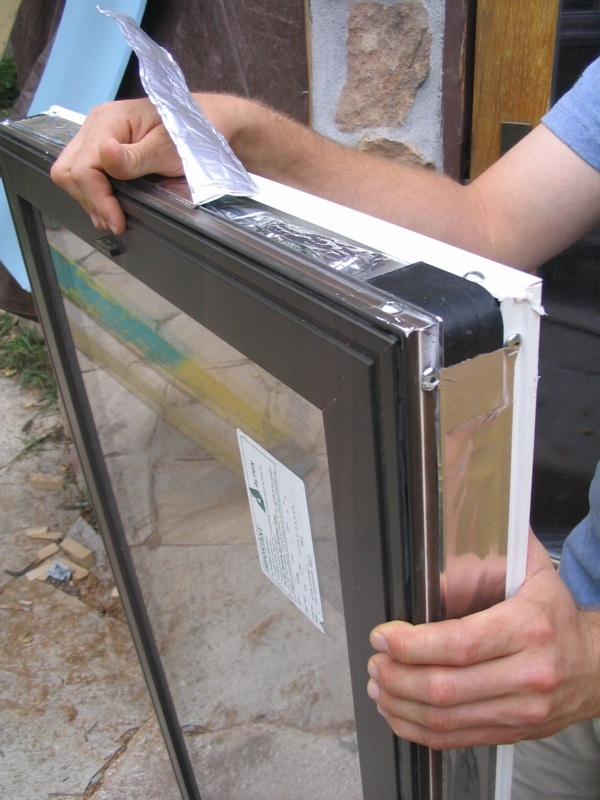
Image Credit: Rocky Mountain Institute
More Energy Solutions


It won’t surprise many of my readers to learn that I’m a fanatic about energy conservation and efficiency. That goes back more than 30 years to the mid-70s. During those years I’ve paid a lot of attention to windows–and seen dramatic improvement in window performance.
Before the 1973 energy crisis, the best windows were made from two layers of glass, usually separated by a quarter-inch air space. Then some researchers at MIT invented a very thin, transparent metallic coating that significantly reduced heat loss by reducing the amount of heat the glazing would radiate outward. These low-emissivity, or low-e, coatings were on suspended plastic film between the layers of glass (the original MIT approach) or coated directly onto the glass.
Other researchers figured out that if the air between the layers of glass were replaced with a lower-conductivity gas, further reductions in heat loss could be achieved. Argon has been most commonly used for this, though the best windows today use krypton or even xenon gas-fill.
With low-e coatings and argon gas-fill, and by increasing the space between the layers of glass to 1/2 or 5/8 inch, the center-of-glass insulating value is increased to about R-4. And that’s where the performance of U.S. windows pretty much plateaued. If heat flow through the glazing edges and frames is factored in to get an average R-value for the entire window (unit R-value) performance is lower.
But even R-4 (that center-of-glass R-value) isn’t very high in a reasonably well-insulated house—say with R-25 walls and an R-40 ceiling. How do we go significantly beyond R-4 windows?
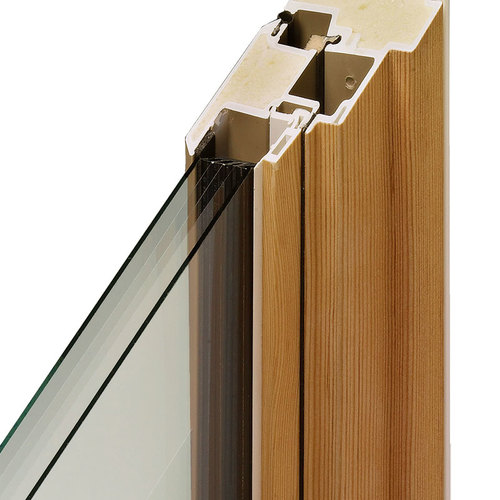
To achieve performance much better than R-4 you have to use additional layers of glazing and additional low-e coatings. For years, whenever I’ve been at a conference with a trade show of building products, I’ve asked window manufacturers when they will introduce triple-glazed windows. I’ve gotten a lot of blank stares.
“We can’t do that,” I’ve been told. “They won’t hold up.” “The technology is untested.” “There isn’t enough demand.” “Seals will fail.”
With that “can’t do” attitude in my mind, I was surprised while traveling in Sweden two years ago to learn that triple-glazed windows have been, essentially, required by code in that country since 1976. I didn’t see any modern windows in Sweden that were not triple-glazed. It’s standard practice. Manufacturers have figured out how to make products that perform just fine–and do a far better job than U.S. windows in controlling heat loss and unwanted heat gain.
This is finally beginning to change here. Canadian window manufacturers, including Accurate Dorwin, Thermotech, Duxton, and Loewen, have made triple-glazed windows for years, and these windows are increasingly making their way into the U.S. The U.S. is way behind Canada, but a few of our manufacturers are dipping their toes into the triple-glazed window world, including a number of manufacturers of vinyl replacement windows.
The U.S. company embracing triple glazing most actively today is Serious Energy, the company created when Serious Materials bought window technology leader Alpen Windows two years ago. Serious Energy then garnered national attention a year ago when it purchased two window manufacturers, one in western Pennsylvania and another in Chicago, that had abruptly folded. (One closing, you might remember, made the national news when it resulted in a demonstration and occupation by laid-off workers.) These factories are now being converted to produce high-performance, triple-glazed windows.
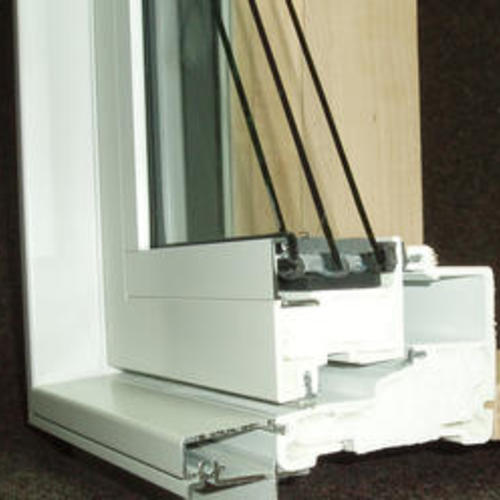
Serious Energy is the only company I’m aware of that uses a combination of low-e coatings on the glass and suspended low-e films. Their top-performing window with two suspended low-e films, low-e glass, and xenon gas-fill (even better than krypton) achieves an industry-leading unit insulating value of R-13. This window uses low-iron glass to achieve a remarkably high “visible transmittance” of 62%.
Serious Energy almost always provides different glazings for different orientations in a building, which further improves overall energy performance. This is a really important strategy. On the south side of a house, it makes sense for windows to be able to transmit more sunlight for passive solar heating, while on the east and west sides, minimizing solar heat gain to prevent overheating is important. This “tuning” of glazings by orientation makes a great deal of sense and should be standard practice with window selection.
I believe that within ten years, triple-glazed windows will be standard practice in colder regions of the U.S., and even mainstream window manufacturers, such as Andersen, Marvin, and Jeld-Wen, will provide easy options to enable builders to tune windows by orientation. We will all benefit.
I invite you to share your comments on this blog. Is the future going to be triple glazing? You can also follow my musings on Twitter.
Weekly Newsletter
Get building science and energy efficiency advice, plus special offers, in your inbox.



39 Comments
SHGC and Frame R Value
It is good that we can get high R value glass, but is it available with High SHGC and in Thermally broken frames? Both are needed for a Passivhouse in northern USA.
In a recent RFQ, no USA / Canada manufacturers were able to provide windows with
Frame Material U Value 0.19 ( thermally broken)
Glass. U= 0.125 minimum.
SHGC >= 0.5
I was only able to get these specifications met with german imported windows.
Meeting Passivhaus standards
Serious Windows can provide lots of window configurations. I don't see anything about the frame U-factor, but I'd be surprised it it it doesn't meet the requirements. If the Passivhaus U-factor is the same U-factor we use in the U.S., that could be a pretty tough standard to meet. U-0.19 equals R-5.3. Most Serious Windows are 1-3/8" thick and made from fiberglass putrusions and insulated with foam, but even that might not achieve R-5.3. Are you sure that U-factor is a U.S. U-factor?
What Serious Windows reports is unit U-factors, which account for both the glazing and the frames. A window they're using in a project in California currently, for example, has low-iron glass on the interior, two Heat Mirror 88 suspended films, low-e (Cardinal 179) on the exterior, and krypton gas-fill. This window achieves a winter unit U-factor of 0.106 and a summer unit U-factor of 0.11, a SHGC of 0.53, and visible transmissivity (Tvis) of 61%. The best window they are using on that project achieves a winter unit U-factor of 0.073 (R-13.3), summer unit U-factor of 0.09, SHGC of 0.51, and Tvis of 62%. (These windows have xenon gas fill, rather than krypton).
U-factors and Passivhaus windows
Steve and Alex,
These questions -- including a discussion of European U-factors and North American U-factors -- were recently hashed out in fairly exhaustive detail in comments posted on my "Passivhaus Windows" blog.
Cost of high performance windows
The return on investment for low U-value windows must work, it makes no economic sense to spend $1000 per window to save $10 or $20 per year in energy costs. The simple payback has to be somewhere in the 10 to 15 year maximum range, windows have a limited lifetime.
Cost of triple-glazed, dual-low-e Serious Windows
I recently had 20 Serious Windows priced for a window-replacement project we're hoping to do at the Dummerston Town Office. The 30.5 x 54" double-hung windows with Cardinal 179 low-e glass, one suspended Heat Mirror 88 film, and a mix of argon and krypton came in at just under $600 apiece. This window achieves a unit R-value of about 5.6. A quote for the same windows in Marvin Integrity (low-e argon) came in at $470, while I think that window has a unit R-value of only about R-3.7. I was very surprised that the Serious Windows cost was so low.
Triple-glazed or double-glazed with a plastic film?
Alex,
Just to clarify -- by writing "triple glazed" in the title of your latest post, did you mean "glazed with two panes of glass and one suspended plastic film"?
Two layers of glass with suspended plastic film
I consider the plastic film a layer of glazing, so I refer to these as triple-glazed, as does the manufacturer. Remember the old Hurd quad-glazed windows? Those had two layers of glass and two suspended films.
Timely discussion of an old topic
This discussion has bee anround for years. The early '80's did bring about products from major suppliers in the US. Some were okay, some were bad. Andersen offered triple glazing (3 pieces of glass) back then, and Hurd, in the late '80's had Insol-8 windows with the heat-mirror texhnology (suspended film) if I'm remembering my terminology correctly. Problem is, with national manufacturers covering a large geographic (and climatically different) area such as the US, significant product design and logistical hurdles have stood in the way of offerings that are both energy efficient and regionally appropriate. I'll leave solar orientation out of this response. I think there is a real opportunity for smaller regional window manufacturers to supply products to their marketplace that meet the specific requirements of their marketplace. In the absence of such manufacturers, we'll still be beating this drum 'til Cardinal, Andersen, Pella, and the ilk get together to offer thirty glass choices in a package and sales system that is understandable to your average salesperson and builder. Good Luck. (I am a fan of trying, though.)
Disappointed in Windows and Americans
I have been planning major energy-related upgrades on my house for a few years, and trying to save up money to do it. On the websites of window manufacturers, I could watch the double pane windows with SHGC of >>0.7 (clear, low iron glass) disappear, alsmost before my eyes. Just give me those back, especially for the south side. I'm not too lazy to find or make adequate night window insulation and not too lazy to operate it, as clearly is the case with most Americans.
Cost of high performance windows
Doug,
It's not just about payback. Friends of mine have condensation all over the bottoms of their new double glazed windows in mornings below 35 degrees, and would have gladly paid an upcharge during construction to make it go away if they had known it was going to be a problem. As well, the windows are uncomfortable to sit next to on cold nights because their interior surface temperature is so low.
To repeat the famous quote: No one asks what the Return on Investment is for their countertops. Why should payback be our only deciding factor for buying windows?
Window condensation
The standard window I have used for the last 25 years is a Marvin with low-E and argon. A great looking window and a good performing window too. It is when you move from this type window U .32 or thereabouts to the PH window the ROI gets questionable. I am all for the very best windows in terms of the comfort and efficiency they provide but the cost has to come down to make economic sense.
Condensation on windows at 35F means no low-E or indoor humidity levels in excess of 40%. I have seen wood frame windows with low-E and argon without condensation at -25F.
Serious windows: user feedback
We are building a new home in Upper Peninsula of Michigan and ended up going with Serious 900 series windows. These are the second level in quality behind their 1100 series. Double film between the glass, not triple as in the 1100s. The U factor ranges between .11 and .17 depending on configuration: fixed, awning or casement and SHGC. We don't have insulation in the walls yet so I can't really tell about their performance but I've noticed a few positives and negatives so far. Negatives: the factory did question if I really wanted high SHGC windows, the VT of the low SHGC windows is pretty low (I don't have the numbers at hand but specs are on their web site). Positives: the high SHGC windows have much better VT - between .5 and .6 - while still in the U.17 range, their cost was about $10,000 less than the quote from a Canadian company, their response time to hook me up with a dealer and get quotes was days instead of the weeks I had spent with the Canadian company.
The house is approximately 2400 sq. ft. and we have a fair amount of south facing glass and two 8 foot sliding patio doors. With oak veneer on the inside, the whole package cost us just over $24,000. The 1100 series windows would have about doubled that price with less than double the performance of the windows.
If I ever do this again, I'll pay more attention to VT and SHGC numbers along with the U factor.
Just checked the specs
Donald,
It sounds like you are talking about the Serious Windows 925 -- I found the specs here.
The casements have a U-factor of 0.17, which is very good. However, the VT is only 0.45, which is so-so, and the SHGC is only 0.33, which is too low for my tastes — too low for most heating climates.
Serious specs
Martin,
Yes, the 925 series. Besides the cost, the 1125 series doesn't have anything in a higher SHGC. I used their comparison chart when selecting the windows http://www.seriouswindows.com/SeriousWindowsTechnicalPerformanceSpecsFiberglass.pdf. We have smaller casements on either side of larger fixed windows on the south so we are doing a little bit better SHGC of .42 and VT of .57 for the larger glass area.
Trying to build a good home is a learning experience for me and I know of no local resources where I could compare in use or even see high efficiency windows in a showroom. I had mostly paid attention to U factor but some of the posts here got me to go for the higher (such as it is) SHGC version of the 925s. I learned about the importance of VT the first time I walked into the house after the windows were installed. But, besides being a learning experience, our budget demands some compromises and the Serious windows fit our budget better than the Canadian options. Finally, our house is in the woods and during the winter the sun is low enough to be filtered by the mix of deciduous and conifer trees so I was also hedging my bets between solar gain limited by location and more insulation value.
Plastic films and durability
Has anybody experienced problems with Heat Mirror or other plastic film technologies? It has been quite a few years since it first came out-would be nice to know if it stands the test of time.
Serious Windows
Hello Donald,
You should have no second thoughts about the windows you are using, the specifications sound terrific to me. With double wall construction and high quality windows like the Serious, you will be amazed at the comfort and the solar gain.
suspended film
The suspended film Hurds that we installed in the 80s have in many cases failed, I suspect that it is a little early to make the call on the Alpen/Serious Window but so far they are behaving well, Hopefully the window manufacturers were able to learn from Hurds experiences. Among mainstream classic window manufacturers Pella should be acknowledged for their triple glazed option.
triple glazed window investment
While these top of the line windows are undoubtedly technically sophisticated, they don't seem to offer a viable return. I've looked in to replacing my 31 windows with top of the line units, and it's a dubious investment at best. Even using manufacturer's estimates (optimistic, I'm sure!), I'm still looking at a 19 year payback. Probably just in time to start replacing the windows! I also fail to see the logic of using low-e glass in cold climates, as I want as much solar gain in the winter as possible. Blocking it in the summer is a simple matter of a shade. Speaking of shades, my research seems to indicate that full perimeter sealed insulated shades are actually more effective at far less cost than these new windows. I ordered 3 (Window Quilt brand) for the coldest room in my house a couple months ago, had them installed ($75/window) and am very pleased with the results. Before I make the leap to the rest of the house, does any one have any experience with these? I've posted on a couple bulletin boards and have received positive responses from owners, but I'd like to hear what professionals have to say, or if they've had experience with another brand. They really seem to work.
Cost effectiveness of window replacement
It is difficult to justify the cost of any replacement window if the insulated-glass windows being replaced are in good shape. I believe that a fairer analysis is whether the INCREMENTAL cost of the better windows can be justified compared with standard windows--whether old, failing windows are being replaced or windows are being chosen for a new house. It may also be possible to justify the cost of expensive window replacements if you assume that energy prices are likely to rise significantly or if you expect your economic situation to change (for example, if you will be retiring and going onto a fixed income, while you have more disposable income today).
As for Window Quilts and other window treatments, they work fairly well as long as thy are properly installed (good edge seals) and homeowners take the time to open and close them. With new construction, I recommend spending the amount you would spend on window treatment and put it into incrementally better windows than you would otherwise install. With existing windows, before deciding to invest in window treatments, I would evaluate how much life is left in the existing windows. If they might need replacement within ten years and you'll likely to be in your house for 20 years, I'd seriously be looking at window replacement.
Low-e coatings not only reduce solar heat gain, they also significantly increase the R-value of the windows. I recommend low-e in all climates (except, possibly, coastal California). In most climates, I would specify a high-performance low-e (such as low-e2) on the east, west, and north and a different low-e glass on the south. On the south, you want a higher solar heat gain coefficient (SHGC) to benefit from passive solar gain, as you note, but you can achieve this with a hard-coat low-e. Unfortunately, high-SHGC low-e glass is not an option from a lot of window manufacturers.
Swedish triple glazed windows - buying guide
Swedish windows - your guide to triple glazed window shopping
Are you interested in more information about Swedish triple glazed windows? Please make a visit at http://swedishtripleglazedwindows.com
We offer a buying guide including a list of Swedish suppliers.
re: triple glazed window investment
Donald mentioned that shades are a great solution to block summer heat on a window with high SHGC. However, I'd venture to say that many people prefer not to shade their windows during a nice day, but rather enjoy the view.....so low-e makes sense for those individuals.
Don't confuse low-e with low SHGC
Rob,
If someone wants a window that blocks summer heat, they would choose a low-SHGC window. But not all low-e windows are low-SHGC. A low-e coating will lower a window's U-factor (raise its R-value). But just because you know a window's U-factor, doesn't mean you know its SHGC.
Serious Windows
I replaced all my windows with Serious Materials' windows (when they were Alpen).
I think that they are superbly made and performance really well. I conducted my own crude tests on them after the were installed. Given the quality I think they were well priced. I have the double film variety with kryton gas, and both fiberglass and vinyl frames.
One of the best upgrades that I've done!
cloudy hurd heat mirror windows
Is there anything I can do about the cloudy flim inside my hurd heat mirror windows? It does not look like there is moister inside the windows, it just looks like the flim has become cloudy, very disapointing. It would not be very green to replace them all, or affordable for that matter. Is there any way to replace that film or remove it?
Very interesting
David,
You should probably contact Southwall Technologies, the company that developed Heat Mirror.
Thanks for sharing your experience.
How old is your glazing?
Triple Glaze Windows
I am looking for noise attenuating capabilities of triple glaze windows, but cannot seem to find much info. I will be replacing two approximately 25 year old, horizontal sliding double glaze windows with thin metal frames approximately 60"x54". I would like to know roughly how much noise reduction I can expect, if any.
Here's some information
Dave,
Here's some information for you:
http://www.google.com/url?sa=t&source=web&ct=res&cd=10&ved=0CDcQFjAJ&url=http%3A%2F%2Fnparc.cisti-icist.nrc-cnrc.gc.ca%2Fnpsi%2Fctrl%3Faction%3Drtdoc%26an%3D5752050%26article%3D6&ei=JPVqS7PsF4XaNqGnuc8E&usg=AFQjCNHAmJS9K99FYqrd0uPOIX1Bh6OyvA&sig2=0vC9q8xdrzsva395BWZtnA
http://www.sgmwindows.co.uk/index.php?action=cms.view&Page=31
http://scitation.aip.org/getabs/servlet/GetabsServlet?prog=normal&id=JASMAN0000680000S1000S26000005&idtype=cvips&gifs=yes&bypassSSO=1
SHG
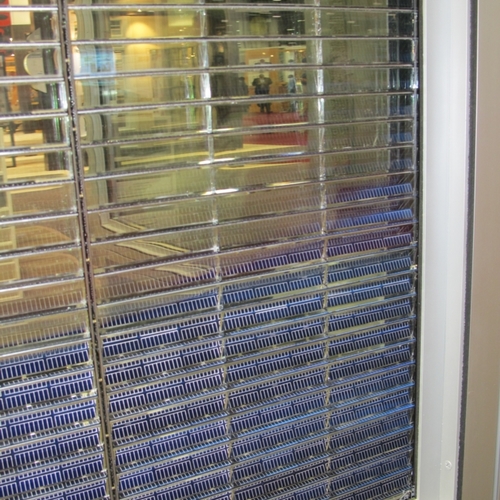
Back when I was in college (30 years ago?) my environmental tech professor was very high on a product called "Cool Shade," which was an aluminum exterior screen with a series of tiny louvers with blades about 1/8 deep and perhaps an inch wide. The louver blades could be ordered at various angles depending on the sun angles that you wanted to block. Horizontal vision through the screens was excellent while sun blocking was almost 100% at high summer angles (and the insects were kept out as well). Of course you needed to take the screens off in winter for full solar gain. Does anyone know if this product is still manufactured?
Window Quilts
We have about 25 Window Quilt brand insulated shades in our house. Most of our windows are south facing, double glazed, non low-e. In my opinion, the added R-value, enhanced solar gain in winter without the low-e and shading efficiency of the quilts in summer make these a better overall performance proposition than serious windows at a fraction of the cost. And we have no problem remembering to use them, because the house is so much more comfortable when they are appropriately deployed (up for solar gain and down to shade and insulate).More information is available at their website, http://www.windowquilt.com.
When I lived in Ireland and
When I lived in Ireland and built energy efficient homes I would always import my triple glazed windows in from Sweden. They were beautiful pieces of kit, in wood, and performed extremely well. The price I paid was very close to that of the local manufacturer of mass produced double glazed windows. To myself, the comfort factor of a triple glazed window is just as important as any pay back time.
I am currently a certified Energy Advisor in BC and am often asked "what's the payback on that" regarding, say, windows or solar hot water. My usual reply is something along the lines of "probably better than the payback on your truck". If you sit and think about it there is actually very little we get "payback" for.
Gienow triple pane windows
I have a 2,400 sqft house under construction near Missoula, MT and am using Gienow windows out of Calgary,AB, Canada. The Canadians are light years ahead of us, as are the Scandinavian countries, in low energy window technology. All US firms seem geared to low SHG and VLT to minimize A/C utilization. Gienow offers many different glazings made by Cardinal, and you can customize the glass for what you want to accomplish. All have very good u values.
I dealt directly with the company before they had a local distributor here and have saved many thousands.I have 3 sliding doors and numerous windows for 3 sided southern lake views at a cost of 15.6K for Low-e triple pane wood clad windows, about the same as Pella contractor dble pane.
Check them out.
60 year old windows + Window quilts
High-tech windows that need replacement every 20 years? That is INSANE. I have a well-made 1951 house. It was built with Anderson Window-Wall windows that are as beautiful as they day they were made. They will last another 50 years, I am sure. I tried to by some Low-E storms - Larsens - to beef up my insulation value. The two local distributors were non-responsive to my calls. "Storms cost almost as much as replacements." I am getting Window Quilts -- which I have also researched -- this posting pushed me over the edge to make the decision. I'm calling tomorrow.
gas filled windows
I am hesitant to purchase any of the gas filled windows, though they do have an R-value significantly higher...reason being might be trust. Can I trust that the gas is going to stay in those windows and not dissipate out over time...Have there been studies on this? The cost difference is substantial and I don't want to pay for windows that are filled with gas to have them be no different than non-gas-filled windows several years from now....and if the window is flawed and the gas leaves how will I know? The company can say they are warranted but if what they are warranting is invisible, how will I know if it dissipates out and is no longer there? I agree with Pam as well in that 20 year replacement seems absurd for such a high cost window...do the Swedes' windows last longer, maybe upwards of 50 years? Thanks -Eric
Ideal Sweden?
I almost feel ashamed to be an American, reading Alex's impressions of Sweden. They form a very strong argument for us to change the way we build. The problem is that I've been living and working as a carpenter in Sweden for 8 years and I've formed some very different impressions: green builders are hard to find, codes are more lax, and double-glazing is still the choice of most budget-conscious homeowners. If you want something to aspire to, you might have to look somewhere else.
1976, really??
Triple glazing in Sweden
Joe,
I'm really curious about this. All of the new construction I saw going on in Malmo, Lund, Kristenstaad, and Växjö used triple-glazed windows, as did all recently relatively modern buildings I saw. I was told that while there isn't a strict prescriptive code requiring triple glazing, there was an "effective" requirement for triple glazing--presumably due to a performance requirement. I wonder if those requirements only apply to larger, attached residential buildings--and your work is mostly single-family? I'd love to hear any more detail you can provide--so that I'm not giving out misinformation! -Alex
Is double-double an alternative?
I am planning a new home. I am intending to make the home very energy efficient.
Can I achieve better energy efficiency using two sets of so-so windows instead of a single set of high-end windows?
I seems that no matter how good the window is, it is limited by how the window is attached to the house. All new construction windows attach to the house with the same kind of nailing flange. Sealing this flange well is obviously important, but in the end there is always the same piece of plastic separating the inside from the outside.
It seems that instead of spending $600 for a really good window, I could spend about $200-$250 each for a full size casement window and a double hung window that are used in tandem. Now I have four pieces of glass, and two completely independent mounting systems. Air infiltration is now blocked twice, and I gain the R value of the extra layers.
Any thoughts?
Double-Double
Gary,
I have also been wondering about this arrangement of doubled up windows; eg a casement on the outside and a double-hung inside. I suspect sealing the inner double hung to the wall structure might be an interesting challenge (probably have to remove the flange if there is one).
Finding matching sizes of casements and double hungs might be a challenge as well. Another head-scratcher is how to work screens for summer use; it might be a bit tricky to maneuver a screen between the two windows...
I would be interested in hearing what you end up with...
Alpen Glass seals fail in less than 5 years
I live in Boulder , Colorado and bought around 25,000 dollars worth of Alpen super high R value windows and 30 percent of them had the seals fail in less than 5 years. They are seriously defective and unreliable
Window Shades
I installed Window Quilts on my passive solar home in 1985. They still work great. I have upgraded the windows on the north, east and west sides. The south is still plain dual glazed.
Log in or create an account to post a comment.
Sign up Log in