
More Green Building News


By the end of 2010, after most remodelers and installers had complied with training and certification requirements under the Environmental Protection Agency’s Lead Renovation, Repair and Painting (RRP) Rule, we were on the lookout for an EPA enforcement action.
An announcement of the first such action in the U.S. rolled out of the EPA’s Office of Public Affairs for New England this week. In a legal complaint dated May 6, the agency alleges that Colin Wentworth, a renovator based in Rockland, Maine, violated requirements designed to protect children from exposure to lead-based paint during painting and other renovation activities, according to an EPA press release.
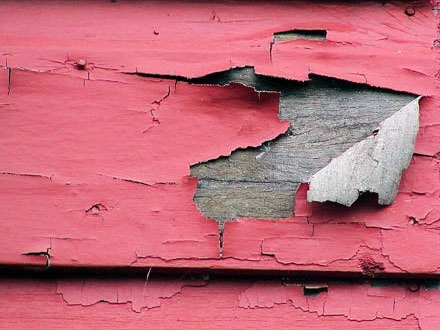
The complaint alleges that two of Wentworth’s employees “failed to contain dust and debris generated by lead paint removal activities during a repainting project in October 2010″ at one of several residential properties Wentworth owns in Rockland. Portions of the paint removal, it turns out, were recorded on video and posted to YouTube. An anonymous tipster alerted the EPA to the video, which showed Wentworth’s workers “using power equipment to remove lead paint from an exterior wall of a residential building without using any containment for lead-containing dust and debris,” according to the agency.
Dust and debris
Wentworth in fact had trained and was certified for lead RRP work, the complaint notes, but his two workers were neither properly trained nor supervised. Another point raised in the complaint is that at least six children, including one under age 6, lived in the four-unit building, which had been constructed in 1852.
Among other concerns cited in the complaint: failure by Wentworth to obtain EPA certification for his renovation firm and his firm’s failure to post warning signs in the work area, cover the ground in that area with plastic sheeting to collect falling debris, and failure to contain waste from the renovation in a way that would prevent dust and debris dispersion. The complaint also noted that the high-speed machines used to remove lead-based paint were not equipped with the required high-efficiency particulate-air filters, and that Wentworth did not keep records required to demonstrate compliance with RRP rules.
Dave Deegan, of the EPA’s Office of Public Affairs in Boston, told GBA that the complaint is in fact “the first of its kind in the U.S.” A complaint is the first step in the legal process that the EPA uses for enforcement. The maximum penalty for the alleged violations in this case is $37,500 per violation per day, which, when tallied up will cost the contractor over $150,000, according to the Bangor Daily News.
LEAD SAFE REMODELING INFORMATION:
Visit Fine Homebuilding’s Lead Safe Remodeling Center for downloadable Special Reports on the EPA rule, videos showing how to comply with the EPA rule, a free downloadable jobsite sign, a compliance toolkit, and links to more crucial information.
Weekly Newsletter
Get building science and energy efficiency advice, plus special offers, in your inbox.




12 Comments
Grotesque
This is an excellent example of grotesque overreach by an un-elected bureaucracy.
Agree
I could not agree more. This should be a states issue not the EPA.
lipstick on the pig
Where was the EPA the last 30+ years, now they want 100% bureaucracy for 10% of what is left. I have my LBPR license and I practice the law, but this is all too little too late IMHO.
what would you have done?
'Unelected bureaucrat' sure sounds bad but we do elect the people who appoint or hire said bureaucrats, right? Let's not pretend there's no accountability. Public officials delegated these powers to the EPA. Also, why a state issue? Is the toxicity of lead any different in Maine relative to Texas or Ohio? Are children living in Maine more deserving of protection from neurotoxins than those elsewhere?
Wentworth's misconduct was committed knowingly and willfully. He knew what the rules were and he chose to ignore them. The violations were public and flagrant. The violations were substantive. The threshold for the RRP rules is over 20 square feet and we're talking about the whole side of a house. Lastly, according to one of the linked articles Wentworth admitted to all but one of the violations.
If you were to argue that the dollar amount is unreasonable I would agree. I think $150,000 would be disproportionate to the harm involved. My hope is that Wentworth and the EPA reach a settlement much less than the statutory maximum. That said, if you're the EPA, the law is on the books, and they are handed this evidence...what do you expect them to do other than enforce the law? If this guy doesn't have it coming, no one does.
Response to Donald and Wayne
Donald and Wayne,
If you had ever been involved with a case involving a young child with elevated blood lead levels, your attitude would change.
Look at the video -- these contractors are being utterly irresponsible. What if your children (or your nieces and nephews) lived in that building? Wouldn't you be furious?
Blatant disregard
While I will tend to agree that many of the new regulations tend to be over reaching, and borderline ridiculous (are you listening OSHA), this is a blatant disregard for public safety. If I lived in that neighborhood, I would be irate. Now, is $150,000 necessary? Not sure, but I would think even a $10,000 fine would get the point across?
A few more observations
1. As far as GBA can tell, this is the EPA's first enforcement action of the new RRP rule.So it's not as if the EPA has been running around citing hundreds of contractors.
2. Once this video was up on YouTube, the EPA could hardly disregard the case.
3. Lesson #1 to scofflaws: remember that most people's cell phones can record video images.
4. Lesson #2 to scofflaws: If you are working on a house across the street from the local Sherwin Williams outlet, remember that all of your competitors -- all of the painting contractors in town, some of whom have higher bids than you because they actually obey the law -- pull into the Sherwin Williams parking lot at some point.
Homeowner Exemption
As I understand it, the law on lead based paint removal specifically exempts owners of residential property from the provisions of the law. Since he owned the building and since it is a residential dwelling, a case might be made that he is exempt from complying with the law. Beyond that, there is little that elected politicians can do stop a run amok bureaucracy. Congess tells EPA that it can't do something and the EPA tries to find away around Congress. Until we start putting bureaucrats in jail for willful and intentional over reaching, we are all going to be at their mercy and have to bear the cost of power grabbing bureaucrats.
Homeowner Exemption
Information for Property Owners of Rental Housing, Child-Occupied Facilities
After April 22, 2010, property owners who perform these projects in pre-1978 rental housing or space rented by child-care facilities must be certified and must follow the lead-safe work practices required by EPA's Renovation, Repair and Remodeling rule. To become certified, property owners must submit an application for firm certification (PDF) (9 pp, 642K) and fee payment to EPA. EPA began processing applications on October 22, 2009. The Agency has up to 90 days after receiving a complete request for certification to approve or disapprove the application.
SEE http://www.epa.gov/lead/pubs/renovation.htm#owners
Exemption
Joseph, they removed the homeowner exemption from the law a year ago. Thank goodness, everyone should have to follow the same law in order to be fair and protect the public effectively. I think it is an important law, just WAY too much too late. Most of the lead paint in this country has already been hastily ground off of houses the last 50+ years, and 30 years after banning the sale of it, they decide to actually enforce a law that was already in place for painters, just not as stringent. Where is their (the EPA and government) accountability?
lead
If a house is 100 years old and has been dripping lead paint for 90 years of them how much lead is being added To the ground. Its already satchurated. If the children are play in the area they will get lead poisoning from the dirt already. If the home doesn't get painted paint will keep falling off the home. Should they fine all the home owner that cant afford the paint the house. If you are doing loops to keep paint off the ground. Chips still get through. Chip clean up is taking as much work as painting. Witch needs to be paid for. Home owner aren't willing to pay for that kind of work In fact you mite as wall go buy a new home. OH they cant afford that ether lets kick them out. no lets blame the painter. What about the responsibility of the manufacturer. On there to big. lets make big fines for small people.. Run thoughs people willing to work out. The government is doing it for the children that makes it rite. The paronce aren't responsible for there children because they dont own them the government owns them. Who allowed the paint to get to the house.
lead
people should be made aware of the problem and left to themselves Wye do I have to breath second hand smoke. are the children. The rivers are full of mercury. Leads in old city water pipes lets fine the painters there workman.
Log in or create an account to post a comment.
Sign up Log in