
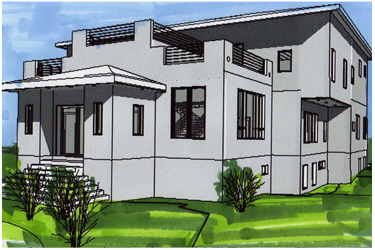
Image Credit: Showcase Architects & Developers
More Green Building News


A Maryland-based architect-developer goes green on an eight-home project in the Washington suburbs
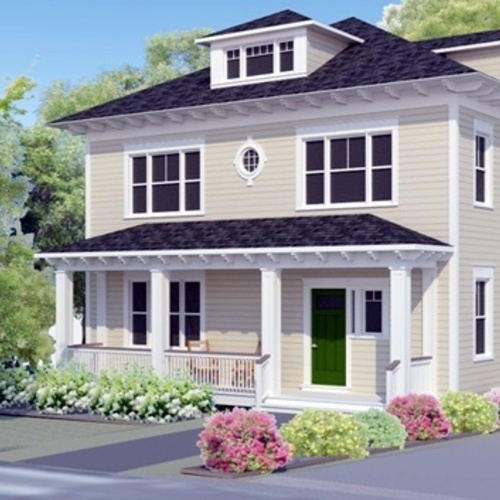
Like most urban and suburban regions in the U.S., the Washington, D.C., area has a fair amount of decent looking housing stock that is, in most cases, green-challenged. But one architect-developer in the D.C. area has begun an eight-home project intended to change how builders and remodelers in and around the nation’s capital think about energy efficient and sustainable construction.
The first house to be built at Eco-Estate @ Briggs Chaney, in Montgomery County, Maryland, will be 10,000 sq. ft. and by far the largest of the eight homes – a model that will show how green technology and strategy can be applied effectively even to a home that, by green standards, is considerably oversized.
“The objective of this project is to build within the natural habitat, minimally impact the environment through use of sustainable design (and) green construction techniques, and to raise awareness of getting off the grid,” architect and developer Nea Maloo, principal of Silver Spring, Md.-based Showcase Architects & Developers, told Builder magazine.
Showcase backed up its promise to “minimally impact the environment” in part by preserving all the trees on the 1.1-acre site and by relocating one of the site’s inhabitants, a 1940s Cape Cod, to the rear of the property, where it will be modified and used as a guesthouse.
The big house – with five bedrooms, five baths, two kitchens, two ADA-compliant bathrooms, and high ceilings – will incorporate universal design principals to accommodate a range of contingencies, including aging-in-place preferences.
The construction and operation phases of Eco-Estate’s big house, meanwhile, will apply several green-friendly systems and techniques, including a ground-source heat pump (which, though built for the big house, likely will be used to service all eight homes); an SIP exterior; an in-floor radiant heat system in the northern portions of the home; a roof garden; wood flooring cut from a plantation-grown eucalyptus hybrid; low-VOC finishes; low-flow toilets; and a comprehensive effort to recycle and reuse scrap materials, including leftover brick, limestone, drywall, roofing material, and wood.
Weekly Newsletter
Get building science and energy efficiency advice, plus special offers, in your inbox.



0 Comments
Log in or create an account to post a comment.
Sign up Log in