Green Heating Options
Green Heating Systems Can Heat the House and Its Water
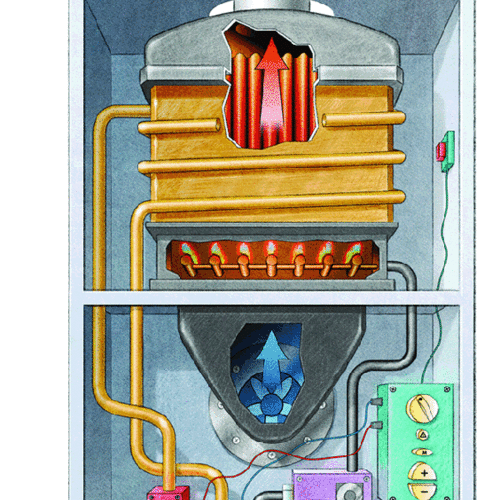
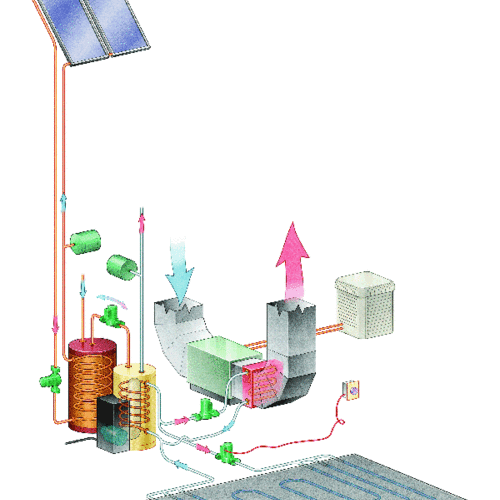
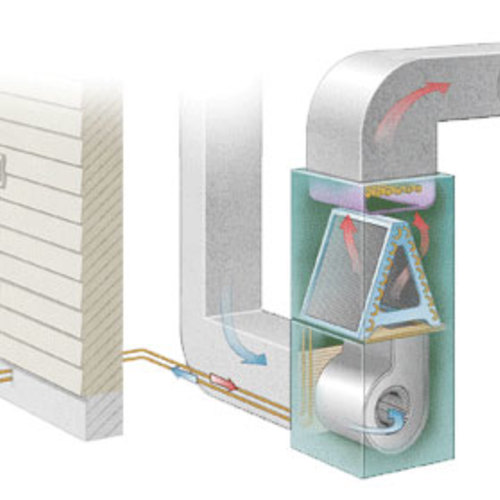
Solar heatingSolar heat is the greenest choice. Well designed active solar space heating systems are expensive and rare. Their main disadvantage is the high cost of the required equipment. | Heat PumpsHeat pumps use electricity but they don’t directly burn any fuel to generate heat. Instead, they collect heat from the air, from pond or well water, or from a liquid medium circulated through pipes in the earth or a pond. The electricity is used for pumping the liquid and operating a compressor. Heat pumps can provide both heating and air conditioning, and they also can be used to provide domestic hot water. | BoilersModern boilers are very efficient. Boilers can burn natural gas, propane, fuel oil, or biomassOrganic waste that can be converted to usable forms of energy such as heat or electricity, or crops grown specifically for that purpose. to supply hydronic heating and domestic hot water systems. Electric boilers also are available. | FurnacesHot air furnaces can provide heat and ventilation but not hot water. Hot air furnaces can burn natural gas, propane, fuel oil, or biomassOrganic waste that can be converted to usable forms of energy such as heat or electricity, or crops grown specifically for that purpose. , and they can also use electricity. The minimum AFUEAnnual Fuel Utilization Efficiency. Widely-used measure of the fuel efficiency of a heating system that accounts for start-up, cool-down, and other operating losses that occur during real-life operation. AFUE is always lower than combustion efficiency. Furnaces sold in the United States must have a minimum AFUE of 78%. High ratings indicate more efficient equipment. for a fossil-fueled noncondensing furnace is 78% but condensing furnaces fired by natural gas with efficiencies of 95% or more also are available. |
ABOUT HEAT AND HOT WATER
Most houses need equipment to stay warm
When the sun is shining, a passive solar house design can take advantage of available solar heat. But in many climates, winter days are short and winter weather is often cloudy, so passive solar gains are rarely adequate to keep a home warm all winter long.
A heating system strongly influences a home's energy use. Only three things have a greater effect: air sealing, insulation, windows.

ABOUT HEATING FUEL CHOICES
Consuming less is more important than the type
All forms of space heating have environmental as well as financial implications, so there’s no such thing as cheap heat. The main choices are natural gas, propane, electricity, fuel oil, wood or wood pellets, and solar.
Solar
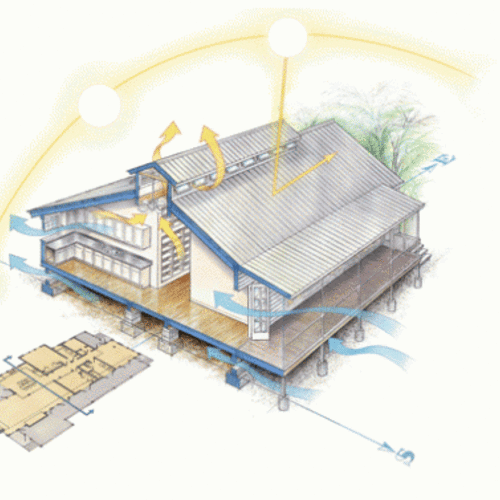
A passive solar house utilizes the sun's heat without mechanical devices. Good passive solar design, which should include attention to producing a tight, well-insulated building envelopeExterior components of a house that provide protection from colder (and warmer) outdoor temperatures and precipitation; includes the house foundation, framed exterior walls, roof or ceiling, and insulation, and air sealing materials., is the best way to minimize energy consumption. Most passive solar houses need a supplemental heating system, which can use one or a combination of several fuels.
A solar hot water system can cut energy bills for heating domestic hot water in half. Unfortunately the case for active solar space heating isn’t as compelling. Systems large enough to heat a house are complex and expensive. An inherent problem is that when the need for heat is at its peak the days are short, winter weather is often cloudy, and the sun is at its lowest point in the sky. In northern climates, it is quite difficult to design an active solar heating system capable of meeting a significant portion of winter heating loads.
Wood
In the right circumstances, firewood harvesting can be done sustainably. Since the carbon released into the atmosphere when firewood is burned is balanced by the carbon pulled from the atmosphere when trees are grown, burning wood is (arguably) carbon-neutral.
Although they aren’t practical everywhere or for all homeowners, high-efficiency biomassOrganic waste that can be converted to usable forms of energy such as heat or electricity, or crops grown specifically for that purpose. appliances may be the least expensive form of heat where the fuel is readily available. Even at prices approaching $200 per cord (a cord equals 128 cu. ft.), a wood-fired boiler or furnace is generally cheaper to operate than an appliance that burns oil, natural gas, propane, or electricity. Unless a homeowner is willing to undertake annual chimney-cleaning chores, any calculation of the cost of burning firewood should include the cost to hire a professional chimney cleaner every year.
Pellet stoves
These burn small, cylindrical pieces of compressed wood chips or sawdust. Stove manufacturers claim efficiencies of up to 87%, making these appliances as efficient as some of the best oil-fired boilers. Pellets are easier and neater to handle than cordwood, and electrically driven augers load fireboxes automatically. These appliances produce relatively little ash.
Corn stoves
These burn corn kernels and are similar to pellet stoves. In rural areas, the price of corn occasionally drops low enough to make it economical to burn corn. However, in light of the recent global increases in food prices and food shortages in many countries, burning edible crops for fuel remains controversial.
Natural gas is clean-burning and less expensive than some alternatives. Most of the natural gas used in the United States is produced domestically. Canada contributes the bulk of the remaining 16%, although a growing volume of gas is being imported from abroad in the form of liquefied natural gas (LNG).
Natural gas is used to run 60% of the heating equipment installed in new single-family homes. Like any fossil fuel, natural gas releases carbon dioxide into the atmosphere when its burned. But gas is cleaner than other petroleum products because it emits less sulfur, carbon, and nitrogen when it is burned. It produces almost no ash. In rural areas beyond the reach of natural gas pipelines, many homes are heated by propane. But propane always costs significantly more than natural gas.
Electricity is an expensive fuel in most areas of the country, although recent price increases for gas and oil have made electricity a bargain in a few areas.
Fuel oil is often the first choice of fuel for homes that are located beyond the reach of natural gas pipelines. The U.S. Census Bureau reports that fuel oil was the source of heat in only 1% of new single-family houses completed in 2005. It’s more common in New England and the upper Midwest where oil boilers and furnaces are installed in 15% of new houses.
There are two drawbacks to fuel oil: price volatility and fuel efficiencies that have lagged behind those of gas-fired appliances.
ABOUT WATER HEATING
Reduce consumption and heat water efficiently
Heating water accounts for about 17% of the average home’s energy budget. Focusing on efficiently heating the water, installing low-flow fixtures, using the shortest supply lines possible, keeping pipes insulated, choosing an efficient clothes washer, and capturing heat from waste water will save energy dollars.
Water heaters use a lot of energy, regardless of whether they're powered by natural gas, propane, electricity, or fuel oil. Bathrooms with multiple showerheads and huge bathtubs or hot tubs practically guarantee high energy bills. The object is to make sure that as little energy as possible is wasted, by choosing an efficient water heater and reducing consumption.
Tank-style heaters combine a heat source and an insulated storage tank. Water is typically heated either by a gas flame or by electric elements inside the tank. Once water is brought up to temperature it sits in the tank until it’s needed. Water is reheated as necessary.
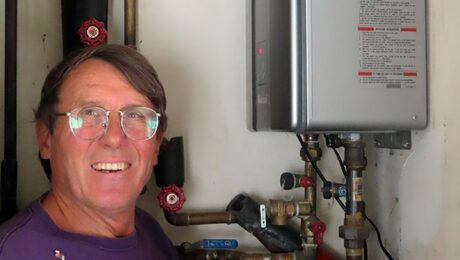
Tankless heaters heat water only on demand. When someone turns on a hot water tap, a gas or electric heating element is triggered. Water is heated only as long as the tap is open. This can save energy, but not water.
Indirect heaters have no energy source of their own. Instead, they rely on a heat-exchange loop connected to a hot-water boiler. Hot water inside the boiler is piped to a coil immersed in the tank, bringing stored water up to temperature.
Solar collectors look increasingly attractive as the cost of fossil fuels continues to rise. There are several types of solar hot water systems on the market that are capable of providing about half of the typical household’s hot water supply.
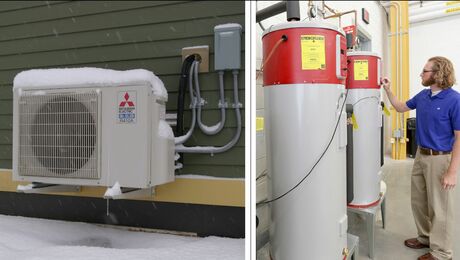
Heat-pump water heaters are available as stand-alone water heaters or as part of a space-heating system (ground-source heat pumpHome heating and cooling system that relies on the mass of the earth as the heat source and heat sink. Temperatures underground are relatively constant. Using a ground-source heat pump, heat from fluid circulated through an underground loop is transferred to and/or from the home through a heat exchanger. The energy performance of ground-source heat pumps is usually better than that of air-source heat pumps; ground-source heat pumps also perform better over a wider range of above-ground temperatures.). These units can be two or three times as energy efficient as a conventional electric tank-style heater.
FOR MORE ABOUT HEATING DOMESTIC WATER
FURTHER RESOURCES
BuildingGreen.com:
Fuel cost calculator
BuildingScience.com:
Combo Space/Water Heating Systems—"Duo Diligence"
Heating Choices
Masonry heaters:
Masonry Heater Association of North America
Image Credits:
- Fine Homebuilding
- John Hartman / Fine Homebuilding

Yahoo
Technorati
Google
Facebook
Delicious
Digg
StumbleUpon
Reddit
Comments