
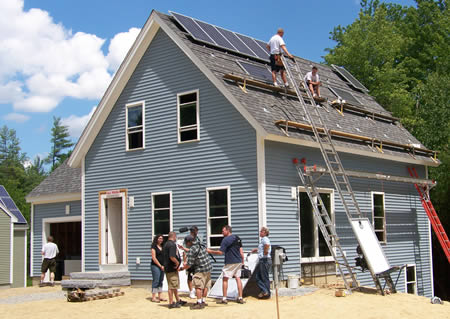
Image Credit: R. Carter Scott
More Green Building News


Just as green homebuilding competitions can help builder-contestants market their services and properties, the larger community of builders, remodelers, designers, and regulators can use them to discover new, cost-effective paths to energy efficiency, and maybe even the occasional construction innovation.
Those are among the goals of the Zero Energy Challenge, a competition highlighting ultra-efficient market-rate and affordable homes constructed by five builders in Massachusetts. Sponsored by the state’s investor-owned electric utilities – National Grid, NSTAR, Unitil, and Western Mass Electric Company – the contest, which started last year, will culminate on June 29 with the announcement of the winner, distribution of $50,000 in prize money, and a talk by Secretary Ian Bowles, of the state’s Executive Office of Energy and Environmental Affairs.
Getting near zero
The power companies developed the Zero Energy Challenge to promote efficiency technologies and strategies in line with an initiative, announced last year by Massachusetts Governor Deval Patrick, that is designed to raise the state’s green building standards. The goals of the contest also mesh with those of the Massachusetts Green Communities Act, an energy reform bill signed into law in July of last year.
The five contestants used a wide range of energy efficiency materials, appliances, and techniques to bring the HERS ratings of their completed projects as close to zero as possible.
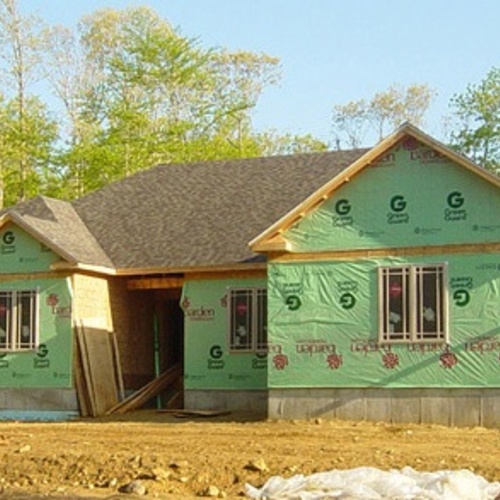
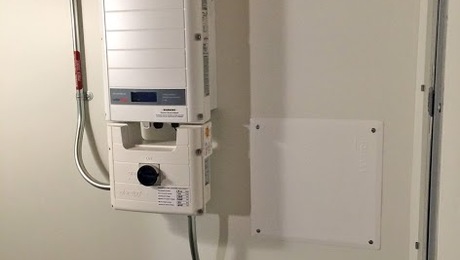
One of the competitors, for example, is Bread & Roses Housing, a nonprofit focusing on building homes for low-income buyers. This builder constructed a 2,080-sq.-ft. 3-bedroom – one of six units being built on three sites in the town of Lawrence. Bread & Roses says it typically builds to the Energy Star Homes standard (an HERS rating of 85) and that this is its first home built to near-zero HERS. The project includes a 3.42 kW solar installation.
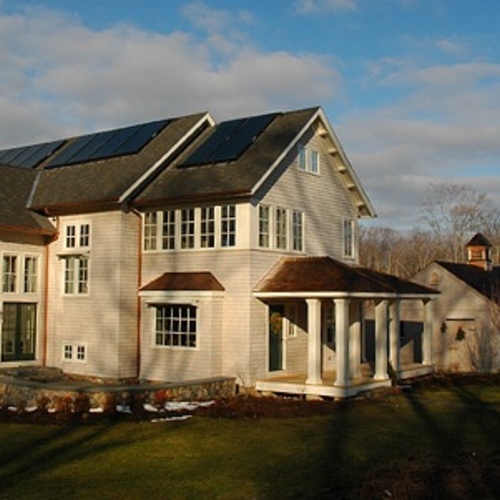
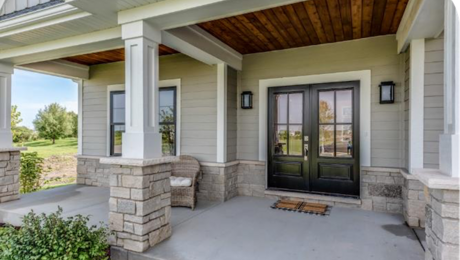
Another entry is the Sevier-Farb residence, a 2,930-sq.-ft. market-rate 3-bedroom in Sudbury that features an extensive PV and solar thermal installation on its south-facing roof, passive solar on that side of the house, and tight construction throughout.
The Zero Energy Challenge website, though, offers the quickest overview of the competition and its participants. Click here for brief profiles of all five contestants and updated details on their projects.
Weekly Newsletter
Get building science and energy efficiency advice, plus special offers, in your inbox.

0 Comments
Log in or create an account to post a comment.
Sign up Log in