Green Building Blog

How To Combine Board and Batten Siding With Exterior Rigid Foam?

Posted on September 1, 2010 by Scott Gibson

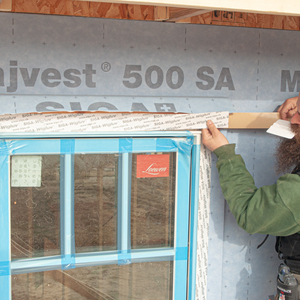
Claire Remsberg, an architect in the Rocky Mountain region, is working on a house where the main goals are to limit thermal bridgingHeat flow that occurs across more conductive components in an otherwise well-insulated material, resulting in disproportionately significant heat loss. For example, steel studs in an insulated wall dramatically reduce the overall energy performance of the wall, because of thermal bridging through the steel. through the 2x6 wood frame and to beef up wall R-values. Plans call for vertical wood siding over a layer of rigid foam insulation.

If that sounds more or less straightforward, the details are not. The contractor has limited experience working with rigid exterior insulation, Remsberg writes, and has concerns that installing siding directly over the foam may not be a great idea.

Hunting Energy Efficiency in Southeast Australia

Posted on August 30, 2010 by Richard Defendorf

It is winter in Australia, and so it is a good time for Peter Reefman, a builder based in the southeastern state of Victoria, to show off the energy efficiency of his recently completed three-bedroom home in the town of Portland.

Can You Heat a House with Air Ducts in a Concrete Floor?

Posted on August 30, 2010 by Scott Gibson

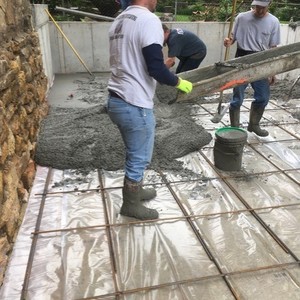
Concrete floors with high thermal massHeavy, high-heat-capacity material that can absorb and store a significant amount of heat; used in passive solar heating to keep the house warm at night. are often at the heart of passive solar designs. The density of concrete helps it store thermal energy and helps to reduce uncomfortable swings in indoor temperatures.

Slabs collect some heat from the sun through south-facing windows, often supplemented by radiant-floor heating systems that use a network of embedded plastic tubing to circulate hot water.

A Payback Calculator for Insulation Retrofits

Posted on August 24, 2010 by GBA Team

Is Bubble Wrap Duct Insulation a Good Idea?

Posted on August 23, 2010 by Scott Gibson

Lora's question seemed innocent enough, but it was enough to touch off a war of words and prove that building science isn't always as dryly academic as you might guess. It can, in fact, get downright cantankerous.

Lora's HVAC(Heating, ventilation, and air conditioning). Collectively, the mechanical systems that heat, ventilate, and cool a building. installer wanted to insulate the ducts in her house with double-wrapped bubble wrap "as a cheaper way to achieve R-6." Fine, she thought, but does the stuff really work?

Vapor Barriers Are a Good Thing, Right?

Posted on August 17, 2010 by Scott Gibson

At the dawn of our current interest in building science, sheets of polyethylene were routinely stapled to interior framing before drywall was installed. The idea was to block the flow of water vapor into exterior walls. (Some builders tried to make their polyethylene seams airtight, so that the poly would do double duty — acting as an air barrierBuilding assembly components that work as a system to restrict air flow through the building envelope. Air barriers may or may not act as a vapor barrier. The air barrier can be on the exterior, the interior of the assembly, or both. as well as a vapor barrier.)

Installing a vapor barrier (or more properly a vapor retarder) was considered cutting-edge.

Comparing Green Building Rating Systems: LEED or NGBS?

Posted on August 16, 2010 by Danny Kelly

Two of the green rating programs we’ve mentioned in this blog series are the LEED for HomesLeadership in Energy and Environmental Design. LEED for Homes is the residential green building program from the United States Green Building Council (USGBC). While this program is primarily designed for and applicable to new home projects, major gut rehabs can qualify. program and the National Green Building Standard (NGBSNational Green Building Standard Based on the NAHB Model Green Home Building Guidelines and passed through ANSI. This standard can be applied to both new homes, remodeling projects, and additions. ) developed by NAHBNational Association of Home Builders, which awards a Model Green Home Certification.. The intent of these two certification programs is similar.

When is a Window Upgrade Worth the Extra Cost?

Posted on August 12, 2010 by Scott Gibson

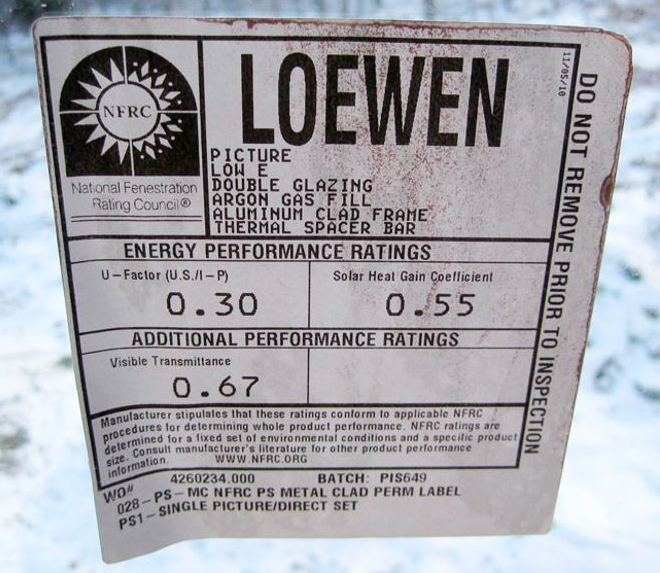
There's no doubt that windows are getting better — much better. The double-glazed, low-eLow-emissivity coating. Very thin metallic coating on glass or plastic window glazing that permits most of the sun’s short-wave (light) radiation to enter, while blocking up to 90% of the long-wave (heat) radiation. Low-e coatings boost a window’s R-value and reduce its U-factor. units that looked so ground-breaking a few years ago seem merely ordinary now that Canadian, European and some U.S. manufacturers are producing high quality triple-glazed units.

Triple-glazed windows offer substantial benefits, including improved indoor comfort and lower energy bills.

But they aren't cheap. Homeowners who are already facing painfully high building costs have to weigh the costs against the benefits. Are triple-glazed windows really worth the added cost?

Building to LEED and NGBS Green Certification in One House

Posted on August 10, 2010 by Danny Kelly

We had already walked and jogged on our journey to green, but we began to worry that we would miss out on our chance to run. We had a pretty good reputation as one of the few builders in town familiar with green building, but the real estate market was headed down, so we weren’t building any more spec homes. We introduced all of our new customers to a range of green building programs, but none of them were very interested.

Back to the classroom

Syndicate content